Kickboxing Protective Gear for Beginners: Head Gear and the Rest of Your Kit
New to kickboxing? Here's the protective gear you actually need and when you need it, how head gear should fit, what it can and can't do, and simple sparring safety tips for your first rounds.
Starting kickboxing comes with a gear list that can look long and expensive. You don't need all of it on day one, and what you need changes once sparring starts. This guide covers what to get and when, with the most detail on head gear, because it's the piece beginners most often buy in the wrong size or expect too much from.
It's written for beginners, but the fit checks and sparring tips are worth a refresh even if you've been training for years.
The beginner kickboxing gear checklist
Buy in stages. Your coach will tell you when you're ready to spar, and that's when the protective gear starts to matter.
For your first classes
- Boxing gloves: for pads, bag work and drills. Many clubs ask for 14 or 16 oz gloves for sparring, so buying those from the start saves you buying twice.
- Hand wraps: support your wrists and knuckles under the gloves. Our hand wraps guide shows how to put them on.
- Mouthguard: cheap, and worth having in from your first partner drill.
Before you spar
- Shin guards with instep covers: protect your shins and feet, and your partner's legs and arms.
- Groin guard: for everyone who spars. Women may also need a chest protector for some sparring and competition.
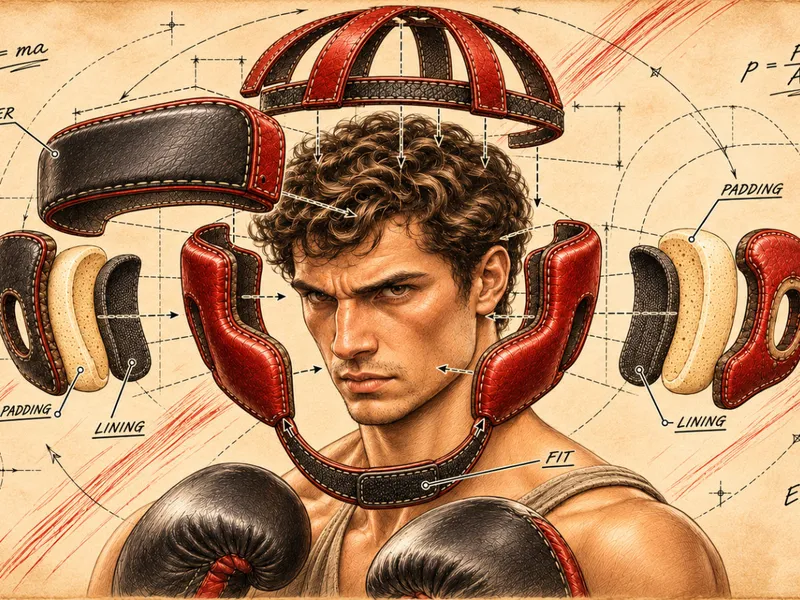
- Head gear: most clubs want it for beginner sparring. More on fit and choice below.
Before you compete
Competition rules differ between kickboxing bodies, events and age groups, so check the event's rules before you buy anything new. As one example, under WAKO rules a head guard, mouthguard and groin guard are compulsory in every fighting discipline [7]. From 1 January 2026, WAKO competitions also only allow equipment carrying a WAKO label [8].
How head gear should fit
A poor fit causes most head gear complaints. If it's too loose, it slips over your eyes when you're hit. If it's too tight, it gives you a headache halfway through a round. Try it on with your gloves and mouthguard in, and run through these checks:
- Measure your head. Run a tape around your head just above your eyebrows and ears, then use the brand's size chart. Sizes vary between makers.
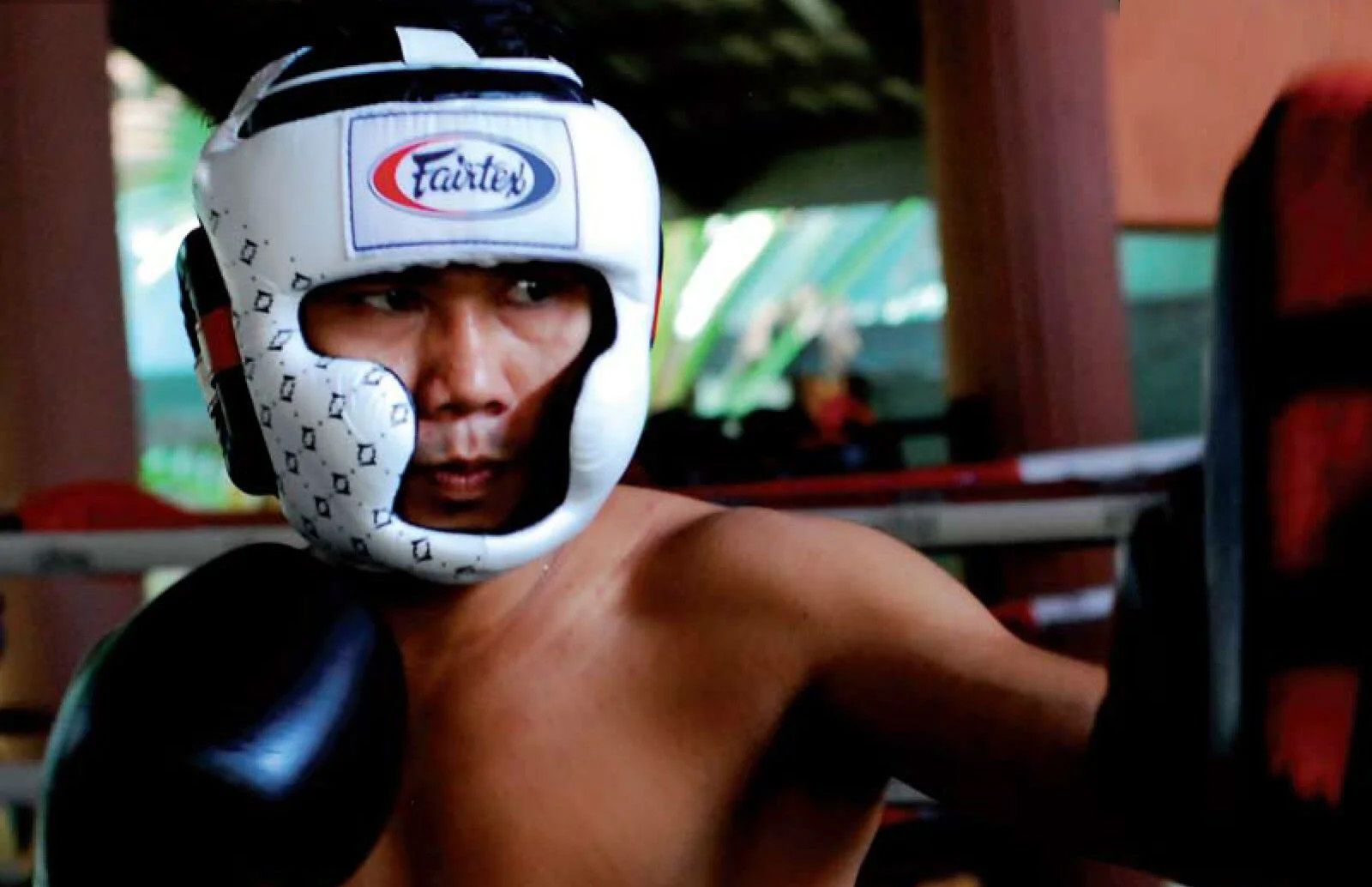
- Check where the padding sits. The forehead pad should sit just above your eyebrows, with your ears in the ear pockets rather than squashed.
- Shake test. With everything done up, shake your head and nod hard. It shouldn't slide or twist.
- Look down. This is the kickboxing check. Without dropping your chin, can you see your partner's hips and knees? If the cheek pads or bar hide low kicks, try another size or style.
- Set the chin strap. Snug, but you should fit a finger or two under it and still breathe and talk easily.
Our full head gear guide goes deeper on sizing, care and buying for kids.
What head gear can and can't do
Head gear is good at preventing cuts, grazes and bruising, and it softens some of the force of a strike. It hasn't been shown to prevent concussion. Doctors who look after fighters say it shouldn't be relied on for that [1], and reviews of the research agree its effect on concussion is uncertain [2].
Ears are a similar story. Cauliflower ear, where a bleed under the skin leaves the ear permanently lumpy, is most common in grappling but can come from strikes too. Head gear with ear coverage can reduce the risk but won't remove it [3], [4]. In wrestlers, cauliflower ear has also been linked with some hearing loss [5].
Many coaches notice that beginners who feel protected relax more, keep their eyes open and focus on technique instead of flinching. That's a coach's observation, not something research has proven. The flip side is real: people tend to take more risks when they wear head gear [1]. Hard sparring in head gear is still hard sparring.
Choosing head gear for kickboxing
Most head gear comes in three styles. Each one trades coverage against how much you can see.
- Open-face: covers the forehead, temples, ears and back of the head. Lightest, with the widest view, but leaves your cheeks and nose exposed.
- Full-face (cheek protectors): adds padding over the cheeks and often the chin. It's the most common choice for kickboxing sparring, and a good first buy for most beginners.
- Face-saver (nose or jaw bar): a bar keeps gloves off your nose. It's handy if you're protecting a nose injury, but it can block your lower view. In kickboxing, that's where kicks come from.
Leather lasts longer and moulds to your head over time. Synthetic is lighter on the wallet and fine for a beginner. If you plan to compete, ask your coach which style and colour the event allows before you choose. Browse our head protection range.
Other gear that matters
Mouthguard
If you only buy one piece of protection, make it this. Head gear does nothing for your teeth. The New Zealand Dental Association recommends a custom-fit mouthguard from a dentist for contact sport [6]. A properly fitted boil-and-bite guard is a sensible place to start. Our fitting guide walks you through it. A mouthguard protects your teeth and jaw, but don't count on it to prevent concussion either.
Gloves
Sparring gloves need more padding than bag gloves to protect your hands and your partner. Many clubs ask for 14 or 16 oz for sparring, with lighter people sometimes using 12 oz. Ask your coach what your gym uses. Keep a separate pair for heavy bag work if you can, because bag work flattens the padding.
Shin guards
Kickboxing means shins clashing with shins, elbows and knees. Look for guards that cover the instep, stay put when you kick and check, and fit from just below the knee to the top of the foot. Thai-style guards with straps suit kickboxing and Muay Thai sparring. See our shin guards.
Groin guard and chest protection
A groin guard is cheap and is compulsory for all WAKO competitors [7]. Some clubs also ask women to wear a chest protector for sparring. It's compulsory in WAKO competition for older female cadets, juniors and seniors [7].
Sparring safety tips for beginners
Gear helps, but how you spar matters more. These are the basics every beginner should know before their first rounds:
- Wait until your coach says you're ready. Your guard, footwork and control should come first.
- Wear the full kit every time. That means gloves, wraps, mouthguard, shin guards, groin guard and head gear if your club uses it.
- Agree the contact level before you start. For beginners, that should be light, technical sparring.
- Control your power. The aim is to land clean technique, not to hurt your partner.
- Pick sensible partners. Look for someone around your size who will match your pace rather than test you.
- Keep your hands up and chin down, and keep breathing. Most beginners drop their hands when they get tired.
- Speak up. Tap gloves to slow down or stop, and tell your coach if something hurts.
- Stop for the day after a hard knock to the head. Don't try to push through it.
Our sparring tips for beginners includes a simple first-session plan. Our post on light versus hard sparring explains why most rounds should stay light.
Questions we get asked
Do beginners need head gear for kickboxing?
Not for your first classes of pads and drills. Most clubs want it once you start sparring, and many competitions require it. Ask your coach what your club expects.
Does head gear prevent concussion?
No. It reduces cuts and bruising and softens some impact, but it hasn't been shown to prevent concussion [1], [2]. Light sparring and good partners do more for your brain than any padding.
Can I use boxing head gear for kickboxing?
Usually, yes, for training. Most head gear sold for boxing works for kickboxing sparring. Just check you can still see low kicks. Competitions may want a particular style, colour or approval label.
What size gloves should I get?
For sparring, many clubs ask for 14 or 16 oz, depending on your weight. WAKO competition gloves are lighter, at 10 oz for most disciplines [7], but that's for bouts, not training. Follow your coach.
Do I still need a mouthguard if I'm wearing head gear?
Yes. Head gear doesn't protect your teeth, and dental injuries are permanent.
When should I replace my head gear?
When the padding goes flat or hard, the lining splits or the straps stop holding. Worn padding protects less, even if the outside looks fine.
Shop the gear
Here's where to find everything on the checklist:
- Head gear: our head protection and boxing head gear ranges, including the full-face Morgan Endurance V2, a good entry-level option.
- Shin guards: our shin guards, such as the Punch AAA shin pads.
- Gloves: sparring gloves such as the Punch Urban Haymaker or Punch Armadillo 16 oz.
- Mouthguards: our mouthguards, including NZ-made Prolon.
- Groin guards and the rest: the Morgan Classic groin guard and our full kickboxing gear range.
Looking beyond kickboxing? Our beginner's guide to protective gear covers other styles, and our cauliflower ear guide covers ear guards for grappling.
Your next step
Ask your coach two things: when you'll start sparring, and what gear your club needs for it. Start with gloves, wraps and a mouthguard. Add shin guards, a groin guard and head gear when sparring is close. Measure your head and do the fit checks before you buy. If you're not sure what fits, get in touch and tell us your size and style, and we'll help you choose.
References
- Association of Ringside Physicians. Headguard use in combat sports: position statement of the Association of Ringside Physicians. The Physician and Sportsmedicine, 2023.
- Le K, Marchant JN, Le KDR. The case for protective headguards in amateur boxing and implications for international policy on headguard bans. Sports Medicine – Open, 2025.
- Schuller DE, Dankle SK, Martin M, Strauss RH. Auricular injury and the use of headgear in wrestlers. Archives of Otolaryngology – Head & Neck Surgery, 1989;115(6):714–717.
- Kordi R, Mansournia MA, Nourian RA, Wallace WA. Cauliflower ear and skin infections among wrestlers in Tehran. Journal of Sports Science and Medicine, 2007.
- Association between hearing loss and cauliflower ear in wrestlers: a case control study employing hearing tests. Asian Journal of Sports Medicine, 2015;6(2):e25786.
- New Zealand Dental Journal. Sports mouthguards: a review. New Zealand Dental Association, March 2020.
- WAKO Europe. Kickboxing equipment. Accessed November 2026.
- WAKO Europe. Approved and verified personal protective equipment and clothing. Accessed November 2026.
- ACC. Sport Concussion in New Zealand: National Guidelines. Updated January 2026.
- ACC. Concussion in sport. Accessed November 2026.