Combat Sports Headgear: Do You Need It, What It Does and How It Should Fit
Headgear is great at stopping cuts and bruises, but it won't stop concussion. Here's when you actually need it, the main types, how it should fit, how to look after it, and what to know if you're buying for a child.
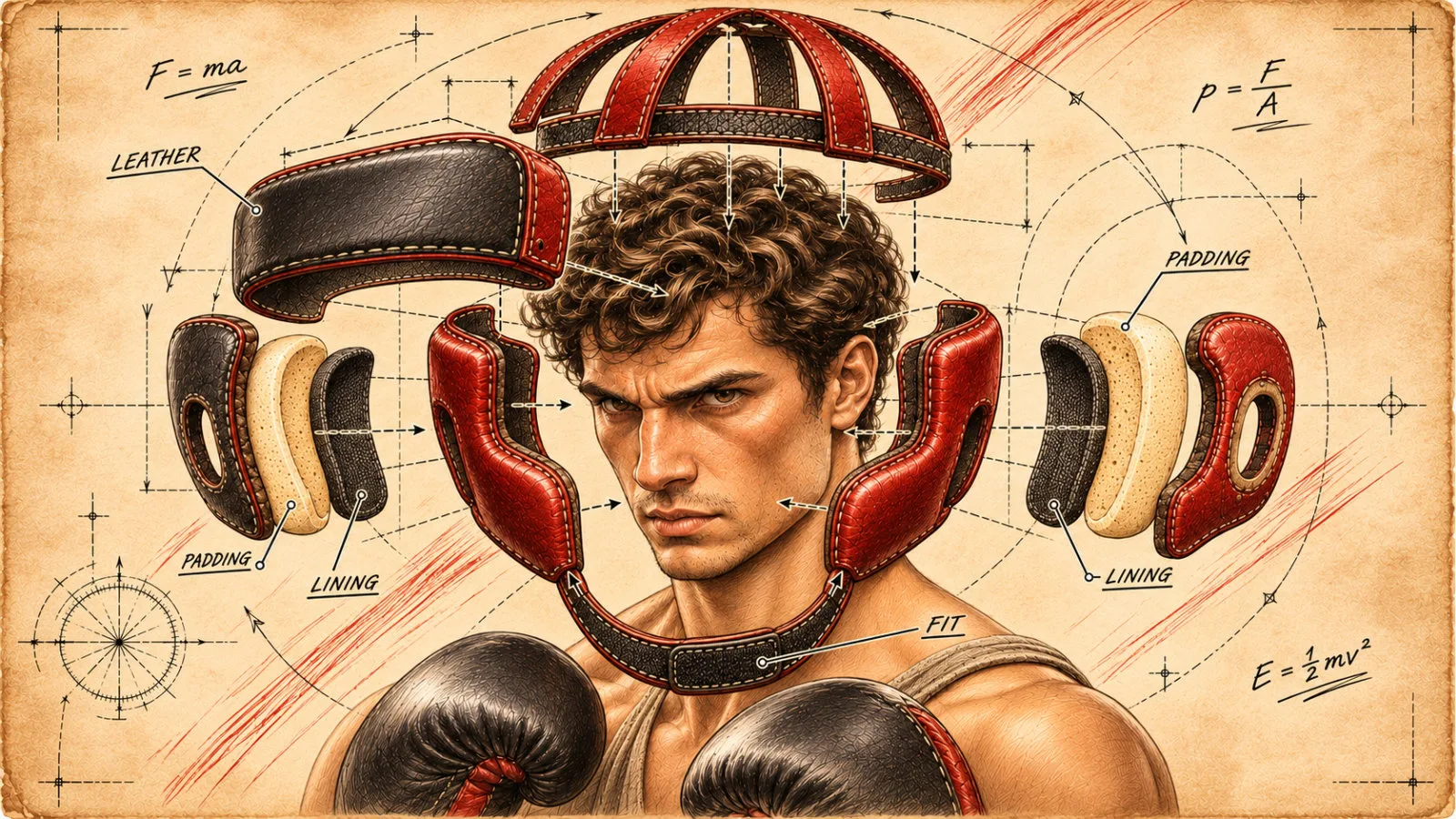
Headgear is one of the first big purchases most people make once sparring starts. It's also one of the most misunderstood. Some people treat it like a crash helmet. Others think it's pointless because Olympic men box without it.
The truth sits in between. Headgear is very good at stopping cuts, grazes and bruising. It hasn't been shown to stop concussion. Once you understand that, choosing, fitting and wearing it gets a lot simpler.
Do you need headgear?
For most people, the answer comes down to two things: what your club asks for in sparring, and what the rules say if you compete. Your coach knows both, so ask them before you buy.
Modern headgear only arrived in amateur boxing in the 1980s, after US medical groups criticised the sport [4]. Rules have kept shifting since then, so here's where things stand now.
Boxing
In 2013, the old amateur body AIBA dropped headgear for elite men. Women and younger boxers kept wearing it [4]. AIBA, later renamed the IBA, has since removed it for elite women in its own events too [5]. Olympic-style boxing is now run under World Boxing, which the International Olympic Committee recognised in February 2025 as boxing's world federation [6]. Boxing New Zealand was one of its founding members [7].
Under World Boxing rules, elite men still box without headgear. At its November 2025 Congress, a proposal to make it compulsory for elite men again was sent to committees to look at for a future congress rather than adopted [8], [9]. If you're new, under 19, or entering a club or novice bout, expect to wear headgear. Check with your club or Boxing NZ for the rules at your level.
Kickboxing, Muay Thai and MMA
- Kickboxing: under WAKO rules, headgear is mandatory in every fighting discipline, from point fighting to K1 [10].
- Muay Thai: amateur rules usually require headgear for juniors. Adult rules vary between organisations and events, so ask the organiser.
- MMA: international youth MMA rules ban strikes to the head altogether for under-18s [13]. Adult amateur rules vary. Ireland's rules, for example, make headgear optional for adults [14]. Many gyms still use it for striking sparring.
Karate and taekwon-do
- Karate: under World Karate Federation rules, headgear is mandatory for competitors under 14 from 2026. Seniors compete without it [11]. Many clubs use headgear for sparring at all ages, so check yours.
- Taekwondo: World Taekwondo rules require a head protector in sparring (kyorugi) [12]. ITF-style taekwon-do clubs usually ask for one too.
Even if your competition rules don't require it, plenty of coaches want headgear in sparring to protect against cuts and clashes of heads. That's a sensible call, and it's theirs to make.
Types of headgear
Most headgear falls into a few styles. Each one trades coverage against weight and field of view.
- Open-face: covers the forehead, temples, ears and back of the head. It's the competition style in amateur boxing and gives the widest view. The cheeks and nose are exposed.
- Full-face (cheek protector): adds padding over the cheeks and often the chin. It's the most common sparring choice for boxing, Muay Thai and MMA, with more cover for slightly less view.
- Face-saver (nose or jaw bar): a bar across the front keeps gloves off the nose and face. It's good if you're protecting a nose injury or want to spar more often with less damage. It's heavier and blocks some of your lower vision.
- Foam or dipped headguards: light, cheap and common in karate and taekwon-do points sparring. They're built for controlled contact, not heavy punches.
- Ear guards: for wrestling and BJJ. They protect the ears from rubbing and crushing rather than strikes. Our cauliflower ear guide covers these.
You'll find all the main styles in our head protection range, or go straight to boxing headgear.
How headgear should fit
A poor fit causes most complaints about headgear. Headgear that's too loose slips over your eyes when you get hit, and headgear that's too tight gives you a headache. The heat, sweat and lost vision people grumble about are real, and fit and style choice make a big difference to all three.
- Measure your head. Wrap a tape measure around your head just above your eyebrows and ears. Use the brand's size chart, because sizes vary between makers.
- Check the padding sits right. The forehead pad should sit just above your eyebrows, and your ears should sit in the ear pockets, not squashed against the padding.
- Do the shake test. With everything done up, shake your head and nod hard. It shouldn't slide or twist.
- Check your view. Look up, down and to each side. If you can't see your partner's hands in your normal guard, try a different style or size. Open-face or cheek-protector styles usually give a wider view than face-savers.
- Set the chin strap. Snug, but you should be able to slide a finger or two under it and breathe and talk easily.
- Wear it for a round. If you can, wear it with your gloves and mouthguard on. Pressure points show up after a few minutes, not straight away.
If you train somewhere hot or do long sessions, look for lighter padding, ventilation holes or a sweat-wicking lining, and take it off between rounds.
What headgear can't do
This is the part people most often get wrong. Doctors who look after fighters say headgear is very good at preventing cuts to the face and should be used where avoiding cuts matters, especially in sparring. They also say clearly that it shouldn't be relied on to reduce concussion or other brain injury [1]. Reviews of the boxing research reach the same view. Headgear protects well against cuts and fractures, but its effect on concussion is uncertain [2], [3].
There's also a behaviour problem. Lab tests suggest headgear softens some of the force of a punch, but people tend to take more risks when they wear it. That may cancel out the benefit [1]. Hard sparring in headgear is still hard sparring.
What actually lowers your head-injury risk is how you train: mostly light, controlled sparring, matched partners and a coach who stops rounds early. Our posts on light versus hard sparring and sparring tips for beginners go into that.
Looking after your headgear
Headgear soaks up sweat every session. If you leave it in your bag, it will smell, break down faster and can help spread skin infections in the gym.
- Air it out after every session. Take it out of your bag and open it up somewhere airy. Keep it out of direct sun and away from heaters, which crack leather and harden foam.
- Wipe it down. Use a damp cloth with mild soap or a gear spray on the lining and outside, then let it dry fully. Condition leather now and then.
- Don't share it. Shared headgear is an easy way to pass on ringworm and other skin infections. Our gi and no-gi kit care guide covers skin hygiene in more detail.
- Check it regularly. Replace headgear if the padding has gone flat or hard, the lining has split, or the straps won't hold. Worn padding protects less, even if the outside looks fine.
Headgear for kids
If your child competes in boxing, kickboxing, taekwondo or junior karate, they'll almost certainly have to wear headgear, and many clubs want it for all junior sparring. Youth rules in several sports go further. International youth MMA rules ban head strikes for under-18s [13], and World Karate Federation rules make headgear compulsory for under-14s [11].
- Buy for the head they have now. Don't buy a size up for them to grow into. Loose headgear slips over the eyes and protects less.
- Check what the club or event allows. Some junior competitions want a specific type or colour, such as approved helmets in karate.
- Add a mouthguard every time. It protects their teeth in a way headgear can't.
- Take every head knock seriously. The same 21-day stand-down applies to children [15], and a child may not tell you they feel off. Watch for changes in mood, sleep or concentration after a knock.
For the rest of what a young martial artist needs, see our beginner's guide to protective gear.
Questions we get asked
Does headgear prevent concussion?
No. It hasn't been shown to, and doctors who look after fighters say not to rely on it for that [1]. It does a good job against cuts, grazes and bruising.
Why don't Olympic men wear headgear?
The old amateur body removed it for elite men in 2013, saying that headgear wasn't preventing concussions. That decision is still debated, and researchers say the evidence is mixed [2], [3]. World Boxing is still considering whether to bring it back [8]. For training and beginners, headgear is still the norm.
Open-face or full-face: which should I get?
If you compete in amateur boxing, open-face is closest to what you'll wear in a bout. For general sparring, most people find full-face (cheek protector) headgear a good balance of coverage and view. Ask your coach what your club uses.
Can I use the same headgear for boxing, Muay Thai and MMA?
Usually, yes, for sparring. Competition is different. Each sport and event may want a specific type, colour or approval, so check before you enter.
How often should I replace my headgear?
There's no fixed timeline. It depends on how often you spar and how well you look after it. Replace it when the padding goes flat or hard, the lining splits or the straps stop holding.
Do I still need a mouthguard if I'm wearing headgear?
Yes. Headgear doesn't protect your teeth. Have a look at our mouthguards.
Your next step
Ask your coach two questions: do you need headgear for sparring, and does your competition (if you're entering one) need a particular style? Then measure your head and do the fit checks above before you buy. Browse our head protection range, or get in touch and tell us your style and head size, and we'll help you pick one that fits. Don't forget a mouthguard to go with it.
References
- Association of Ringside Physicians. Headguard use in combat sports: position statement of the Association of Ringside Physicians. The Physician and Sportsmedicine, 2023.
- Tjønndal A, Haudenhuyse R, de Geus B, Buyse L. Concussions, cuts and cracked bones: a systematic literature review on protective headgear and head injury prevention in Olympic boxing. European Journal of Sport Science, 2021.
- Le K, Marchant JN, Le KDR. The case for protective headguards in amateur boxing and implications for international policy on headguard bans. Sports Medicine – Open, 2025.
- ESPN. Report on AIBA's removal of headguards for elite male boxers. ESPN, 2013.
- International Boxing Association. Removal of women's headguards among decisions taken by the IBA Board of Directors. IBA.
- World Boxing. Press releases, including IOC provisional recognition (25 February 2025). World Boxing.
- World Boxing. World Boxing increases global footprint with addition of six new members. World Boxing, October 2023.
- World Boxing. 2025 World Boxing Congress minutes. Rome, 23 November 2025.
- World Boxing. Proposal for rulebook amendments (bundle), including Article 13.3.3, headgear. November 2025.
- WAKO Europe. Kickboxing equipment. Accessed November 2026.
- Karate News. WKF 2026 rules update: what's changing on January 1st. 2025.
- World Taekwondo. Competition Rules & Interpretation (Kyorugi), in force as of 1 January 2026.
- IMMAF. Youth MMA rules: coach and athlete summary. IMMAF, 2026.
- IMMAF. IAPA sets new Irish MMA safety regulations. IMMAF.
- ACC. Sport Concussion in New Zealand: National Guidelines. Updated January 2026.
- ACC. Support safer concussion management with the National Concussion Guidelines. ACC provider news, 2026.