Concussion in Martial Arts: Signs, Red Flags and the 21-Day Stand-Down (NZ Guide for Martial Artists)
You don't need to be knocked out to be concussed, and New Zealand's national guidelines now say at least 21 days before you compete again. Here's how to spot it on the mat, what to do next, and what headgear can and can't do.
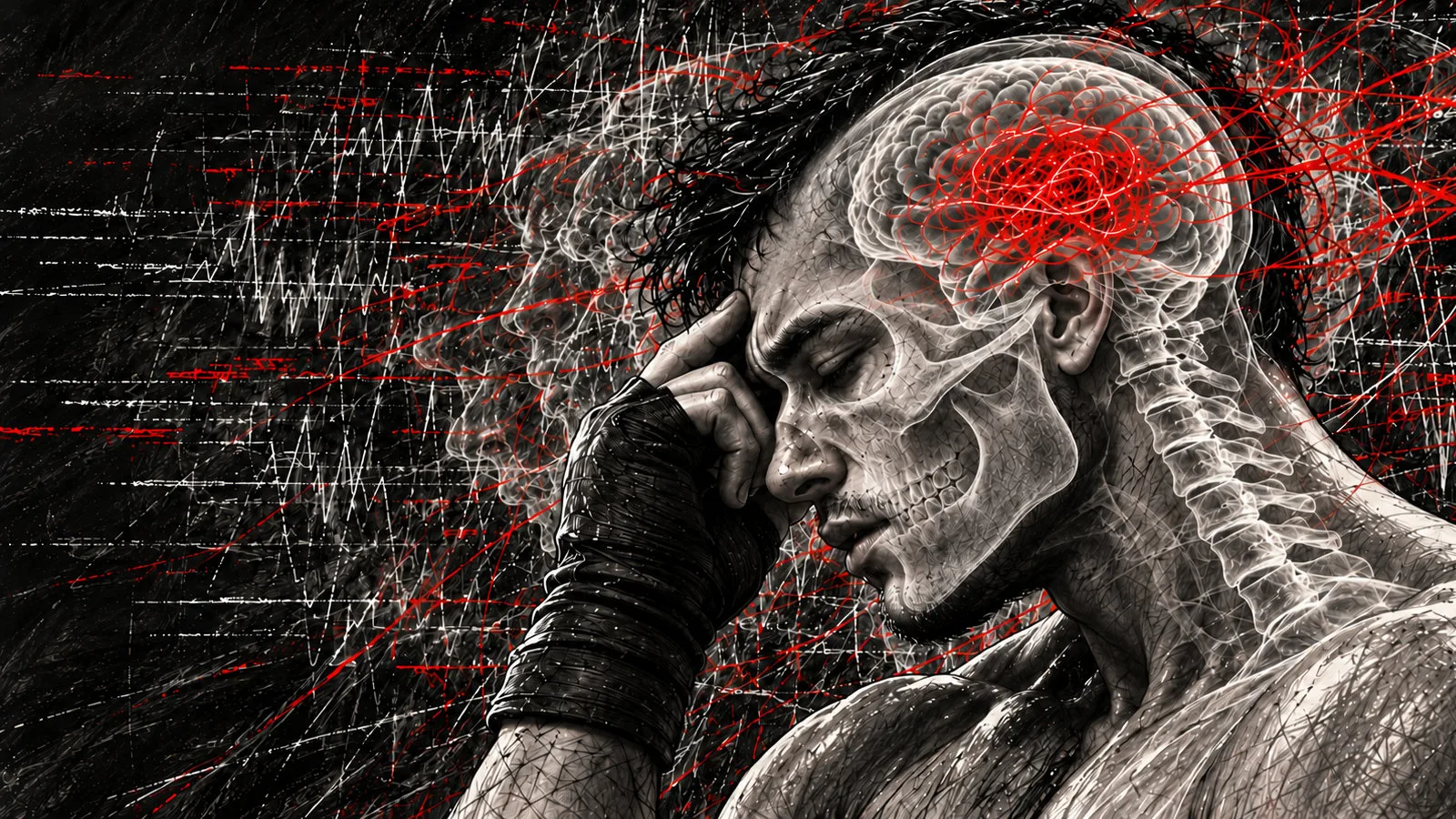
A student takes a clean hook in sparring, shakes their head, says "I'm fine" and asks for another round. Most of us have seen it, and plenty of us have been that student. Under New Zealand's national sport concussion guidelines, that person is done for the day, needs to be checked by a health practitioner, and shouldn't compete again for at least 21 days [1].
That's the short answer. The rest of this post covers what concussion looks like in a dojo or gym, the red flags that mean an ambulance, how the 21-day stand-down works stage by stage, and what headgear and mouthguards can realistically do about it.
This is general information, not medical advice. If you think you or your child has a concussion, see a doctor.
What concussion actually is
Concussion is a brain injury. It changes how the brain works for a while, and it doesn't need a direct shot to the head: a hard hit to the face, neck or body can whip the head enough to cause one [1]. Only around 10% of concussions involve being knocked out [1].
In striking arts the obvious causes are hooks, head kicks and knees. Grapplers get them too. A judo throw where the back of the head bounces off the tatami, a scramble that ends in a clash of heads, a slam in no-gi. If someone describes "getting their bell rung" or "seeing stars", treat that as a possible concussion.
It isn't rare. ACC received 6,440 claims for sport-related concussion in 2022, and the guidelines estimate around 30% of concussions go unreported [1].
Signs to watch for on the mat
ACC splits the signs into what you can see and what the person feels [2]. Any one of them is enough to stop.
Things a coach or training partner might notice:
- Lying still, or slow to get up after a fall or strike
- A dazed, blank or vacant look
- Unsteady on their feet, stumbling or losing balance
- Clutching or holding their head
- Confused about where they are or what's happening
What the person may report:
- Headache or pressure in the head
- Dizziness, or being bothered by light or noise
- Feeling slowed down, foggy or just "not right"
- Drowsiness or fatigue
- Being more emotional, irritable or anxious than usual
ACC also suggests simple memory questions [2]. Its examples are written for team sports, so in a club setting try "What round is this?" or "What were we drilling before sparring?" These are a prompt, not a test. Getting them right doesn't clear anyone.
Red flags: call 111 or go to A&E
Most concussions settle with time and a sensible plan. A small number are something worse, like bleeding on the brain or a neck injury. Get urgent help if any of these show up [1]:
- Neck pain
- Loss of consciousness, or a seizure
- Severe headache, or one that keeps getting worse
- Repeated vomiting
- Weakness, tingling or burning in the arms or legs
- Double vision
- Increasing confusion, irritability, or behaviour that's out of character
- Getting worse after the injury, such as becoming drowsier
- A visible deformity of the skull
- A history of a bleeding disorder, or taking medication that thins the blood (warfarin or aspirin, for example)
That last point matters more than people think in adult classes. We see plenty of over-40s training these days, and some are on a daily aspirin or other blood thinner. A knock that would be minor for a 20-year-old needs to be taken more seriously for them [1].
If someone is unconscious, treat it as a possible spinal injury. Don't move them unless they're in danger, and don't pull off their headgear; leave that to trained people [2]. Once the red flags are ruled out, the person still shouldn't be sent home alone or drive until a health professional has cleared them [3].
The 21-day stand-down, stage by stage
Since 2024, New Zealand has had one national standard for returning to community sport after concussion. The guidelines were updated in January 2026 [1] and are endorsed by Sports Medicine NZ, Physiotherapy NZ and the Royal NZ College of General Practitioners, among others [4].
The rules in plain terms: no going back on the day of the injury, a minimum of 14 days before full contact training, and a minimum of 21 days before competition [1]. You move through six stages, with at least 24 hours between each, and you drop back a stage if symptoms get worse [1].
| Stage | Earliest | What it looks like |
|---|---|---|
| 1. Relative rest | Days 1 to 2 | Light everyday activity that doesn't bring on symptoms. Keep screens to a minimum. Gentle walking around the house. |
| 2. Ease back into daily life | After stage 1 | Short walks outside, some TV and reading. |
| 3. Build tolerance | After stage 2 | More study or work with breaks. Exercise gets harder, guided by symptoms. |
| 4. Back to work or school, non-contact training | After stage 3 | Part-time work or school. Training with no risk of a hit to the head. |
| 5. Full sport-specific training | Day 14 | Only once back at work or school full time, stages 1 to 4 are done, and you've been symptom-free at rest for 14 days. |
| 6. Competition | Day 21 | Still symptom-free through stage 5. Clearance from a health practitioner is strongly recommended. |
The guidelines were written with team sports in mind, so here's how we read them for martial arts. Stage 4 is solo work: shadow boxing, skipping, bag work, technique on your own. Partner drilling with contact, hard sparring and live rolling belong at stage 5 at the earliest. Fights, tournaments and gradings with sparring sit at stage 6. That's our interpretation, so check it with whoever is managing your recovery.
Read the stage 5 rule again, because it trips people up. You need 14 days symptom-free at rest, not 14 days since the injury. If your headaches hang around for a week, you're looking at three weeks before contact training, not two. The 21 days is a minimum, not a target. An Auckland study found fewer than half of patients with a sport-related concussion had recovered within two weeks [5]. The international consensus says most people recover within about four weeks [6].
Kids, teenagers and women tend to take longer, and the guidelines say to progress them more slowly [1]. Young people should be back at school without problems before they're back on the mat.
Rest has changed too. The old advice to lie in a dark room until you feel better is out. Strict rest isn't recommended, and light exercise that doesn't make symptoms worse helps recovery [6]. That's why stage 1 is only a day or two.
Two more things to know. If symptoms last more than four weeks, or you can't get through the stages, you need a referral to someone who specialises in concussion, and you should make sure the injury is registered with ACC so you can get support [1]. Anyone with three or more concussions in a season, or more than five over their time in sport, should be reviewed by a concussion specialist before going back [1].
Does headgear stop concussion?
Honestly, the evidence here is thin. Boxing headgear clearly reduces cuts, and lab tests show it lowers impact forces. Whether that turns into fewer concussions hasn't been shown with good research [7]. When international experts reviewed concussion prevention in 2022, the measures they backed were rule changes to reduce collisions, neuromuscular warm-ups (balance, strength and agility work, sometimes with neck exercises) and mouthguards in ice hockey [8]. Headgear wasn't on the list.
Mouthguards are similar. They protect your teeth and mouth well. The concussion evidence comes from ice hockey and we don't know how far it carries over to combat sports [8].
We sell headgear and mouthguards, and we'd still tell anyone who spars to wear both. Just wear them for the right reasons. Headgear saves your eyebrows and your training partner's knuckles from clashes; a good mouthguard saves you a big dental bill. Neither one makes hard sparring safe. What lowers your head-injury load is how you train: controlled sparring most weeks, hard rounds kept for when they're needed, and a coach who stops a round early. Some people find boxing headgear makes them feel braver than they should. Keep that in mind.
What clubs and parents can do
A concussion plan doesn't need to be fancy. ACC suggests every club keeps a list of the nearest medical centre, A&E and concussion clinic for wherever you train [2]. Write it on the noticeboard next to the first aid kit.
Sport NZ and ACC have a free online course called "When in doubt, sit them out" for coaches, teachers and volunteers. It covers spotting a possible concussion and why the 21-day rule matters [9]. It's worth getting every instructor in the club through it, including the brown belts who help with the kids' class.
For parents: you know your child better than anyone on the mat. If they're not themselves after a knock, say so, and don't let a grading date or tournament hurry them back.
Frequently asked questions
I wasn't knocked out. Can it still be concussion?
Yes, and most of them happen that way. Only about one in ten concussions involves a knockout [1]. If you're foggy, headachy or just don't feel right after a knock, take it seriously.
Can I still come to class and watch, or do light drills?
Coming along to watch is fine once you feel up to it, and lots of people find it keeps them connected. Non-contact training fits into stage 4, after the first few stages are done and ideally with your doctor or physio guiding the timing [1]. No partner contact until stage 5, and that's day 14 at the very earliest.
Does ACC cover concussion?
Concussion from sport is an injury like any other, so see your GP or an urgent care clinic and they'll lodge the claim. If symptoms drag on, your doctor may be able to refer you to ACC's concussion services, which include specialist physio and other support [1].
Should I rest in a dark room until the headache's gone?
No. A day or two of taking it easy, then gradually do more as long as symptoms don't get worse [1]. Light exercise actually helps [6]. Lying around for a week isn't the advice anymore.
How many concussions is too many?
There's no magic number for everyone. The NZ guidelines say three or more in a season, or more than five in your sporting life, should mean a review with a concussion specialist before you go back [1]. That conversation is about you, so have it with someone who knows your history.
Your next step
Take a photo of the red flags list above and keep it on your phone. If you coach, book your instructors into the free "When in doubt, sit them out" course this week and put the nearest A&E details up on the club wall. If you're the one with the headache right now, the next step is a GP appointment, not the next class.
References
- Accident Compensation Corporation. Sport Concussion in New Zealand: National Guidelines (updated January 2026). ACC, 2026.
- Accident Compensation Corporation. Concussion in sport and recreation. ACC, 2026.
- Echemendia RJ, et al. Introducing the Concussion Recognition Tool 6 (CRT6). British Journal of Sports Medicine, 2023.
- Accident Compensation Corporation. Support safer concussion management with the National Concussion Guidelines. ACC provider news, 2026.
- Kara S, Crosswell H, Forch K, Cavadino A, McGeown J, Fulcher M. Less than half of patients recover within 2 weeks of injury after a sports-related mild traumatic brain injury: a 2-year prospective study. Clinical Journal of Sport Medicine, 30(2), 96–101, 2020. pubmed.ncbi.nlm.nih.gov
- Patricios JS, et al. Consensus statement on concussion in sport: the 6th International Conference on Concussion in Sport, Amsterdam, October 2022. British Journal of Sports Medicine, 2023.
- Le K, Marchant JN, Le KDR. The Case for Protective Headguards in Amateur Boxing and Implications for International Policy on Headguard Bans. Sports Medicine - Open, 2025.
- BMJ. International expert panel revises management of concussion in sport. BMJ Group, 2023.
- Sport New Zealand. New course helps adults recognise and respond to concussion. Sport NZ, 2026.