Do Ear Guards Help With Cauliflower Ear? Prevention, Early Care and When to See a Doctor
Ear guards cut your risk of cauliflower ear, but they don't remove it. Here's how cauliflower ear forms, what guards can and can't do, and what to do if an ear swells up.
If you roll, wrestle or do judo for long enough, someone will ask about your ears. Maybe one is already sore, warm or a bit puffy after training, and you're wondering whether ear guards are worth the hassle.
The honest answer: ear guards cut your risk of cauliflower ear a lot, but they don't remove it. If an ear does swell up, getting it seen to quickly matters more than any product.
This guide covers how cauliflower ear forms, what guards can and can't do, how to get them comfortable enough to wear, and what to do if an ear swells anyway.
How cauliflower ear actually forms
The outer ear is a thin sheet of cartilage (the firm, bendy tissue that gives your ear its shape) covered by tight skin. The cartilage has no blood supply of its own. It's fed by a thin lining just under the skin, called the perichondrium.
When your ear is squashed, twisted or ground into the mat, that lining can shear away from the cartilage. Blood or fluid fills the gap. Doctors call this an auricular haematoma [1].
Cut off from its blood supply, the cartilage underneath can be damaged. If the fluid isn't removed and the skin held back in place, the body lays down scar tissue and new, lumpy cartilage. That's the thick, folded shape people call cauliflower ear [1].
Each new knock on an injured ear can add to the damage. That's why one rough week of training can leave a lasting mark, and why an ear that's already sore needs extra care.
What ear guards can and can't do
Ear guards (sometimes called grappling headgear) put a padded shell over each ear. They spread out the pressure from a squeeze or a knee and stop your skin being dragged across the mat or a partner's gi.
The best evidence comes from wrestling. In a survey of 537 US college wrestlers, 26% of those who wore headgear reported an ear haematoma, compared with 52% of those who didn't [2]. That's a big difference. It also shows guards give partial protection, not complete protection.
The same survey found most wrestlers wore headgear in competition, but only about a third wore it all the time in practice. Discomfort was the most common reason [2]. Most of your rolling happens in training, so that's where guards earn their keep.
Who they suit
Guards make the most sense if you grapple several times a week, you're getting sore or hot ears, you've had an ear drained before, or you'd simply like to keep your ears the way they are. They're also worth having while a recently injured ear settles down.
Who might skip them
Some people roll for years and never have ear trouble. That's real, but you can't know in advance which group you're in. If you already have a hard, settled cauliflower ear and aren't fussed about it, guards matter less for that ear. They can still protect the other one.
Guards also cost you a little. They can be hot, can muffle your coach's voice, and give partners something to grab. For most regular grapplers the trade is worth it, but it's your call.
Making guards comfortable enough to wear
Guards only help if they're on your head, so comfort is the real issue. Most have a soft neoprene-type outer with harder ear cups and adjustable straps.
Getting the fit right
They should be snug enough not to slide during scrambles, without pressing hard on the ear itself. Centre each cup over the ear hole, then tighten the back strap before the chin strap. If the cups are pushing on your ears, the guard is too small or sitting too low.
Living with them
Give them a few weeks. Most people stop noticing guards once they're used to them, the same as a mouthguard. Most people wear neoprene without trouble, but a few get skin irritation. If you get a rash, stop wearing them and talk to a pharmacist or your GP.
If an ear swells up: early care
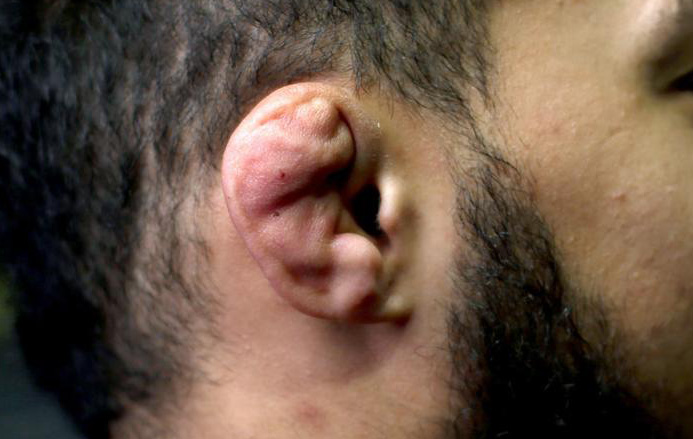
A fresh haematoma usually looks like a soft, tender, sometimes warm swelling on the outer ear, often on the upper rim or in the bowl. If you notice one, stop training on it and get it looked at soon.
Your GP or an urgent care clinic can assess it. Drainage is done under local anaesthetic with sterile equipment, then a firm compression dressing goes on to stop the space filling again [1]. Draining an ear yourself or at the gym risks infection of the skin or cartilage, which can damage the ear more than the original injury [1].
Ears sometimes refill after draining, and repeat visits aren't unusual. In one US hospital review, a bolster dressing (padding held firmly against both sides of the ear) and early input from an ear, nose and throat specialist were linked to fewer repeat haematomas [3]. If yours keeps refilling, ask about a referral.
In New Zealand, an ear injured in training counts as an accident, so the clinic can usually lodge an ACC claim for you. If it's covered, ACC pays part of the appointment cost and you pay the rest [4].
Keeping the ear compressed while it heals
After drainage, the aim is to keep the skin pressed against the cartilage so the gap can't refill [1]. There are a few ways to do it. Your doctor is the best person to say which suits your ear.
A dressing from your doctor
This is the standard approach. A bolster of gauze or dental rolls is held firmly against the front and back of the ear [1]. It's bulky, but it's put on by someone who can see exactly where the fluid was. Some clinicians use moulded splints instead.
Compression magnets
Some grapplers use silicone-covered magnets clipped either side of the ear, such as CauliBuds or similar products. They're easier to wear day to day than a dressing. But we haven't found published studies testing them, and some users report sore skin or blisters when the squeeze is too strong. If you try them, check with your doctor first, check your skin every few hours, and keep strong magnets away from small children.
What compression won't do
Compression helps an ear heal flat after the fluid is out. It won't remove a fluid-filled lump on its own, and it won't flatten an ear that has already hardened.
Questions we get asked
Will ear guards stop me getting cauliflower ear?
Not completely. In the biggest survey we know of, wrestlers who wore headgear had about half the rate of ear haematomas of those who didn't [2]. That's well worth having, but you still need to act fast if an ear swells.
Can I drain my own ear?
We'd advise against it. Done without sterile equipment and a proper compression dressing, it can lead to infection or the ear refilling [1]. Your GP or an urgent care clinic can do it properly, and ACC may cover part of the cost [4].
My ear has already gone hard. Is it too late?
For that ear, it won't go back on its own. A specialist can talk to you about whether surgery is an option. Guards are still worth wearing to stop it getting worse and to protect your other ear.
How soon can I train after an ear is drained?
Ask the doctor who drained it. Medical guidance suggests leaving the ear alone for about a month after the dressing comes off, so it can heal in shape [1]. When you go back, wear guards and avoid heavy pressure on that side.
Do I need guards for gi and no-gi?
Ears get injured in both. The gi adds collar grips and lapel friction, and no-gi has more head-and-arm squeezes. If you're prone to sore ears, wear them for both.
Your next step
If you train regularly without ear protection, try guards for a few weeks of normal training and spend five minutes getting the straps right. If an ear is swollen right now, skip the shop and book in with your GP or an urgent care clinic today.
References
- Dinces EA. How To Drain an Auricular Hematoma. MSD Manual Professional Version, 2025.
- Schuller DE, Dankle SK, Martin M, Strauss RH. Auricular injury and the use of headgear in wrestlers. Archives of Otolaryngology – Head & Neck Surgery, 115(6):714–717, 1989.
- Dalal PJ, Purkey MR, Price CPE, Sidle DM. Risk factors for auricular hematoma and recurrence after drainage. The Laryngoscope, 130:628–631, 2020.
- ACC. What to do if you're injured. Accident Compensation Corporation, accessed 2026.
Was this helpful?
Keep reading
What Is a Dogi? The Martial Arts Uniform Explained, From Kano's Judogi to Today
Ankle Supports for Muay Thai, BJJ and Martial Arts: What They Do and Who Needs One