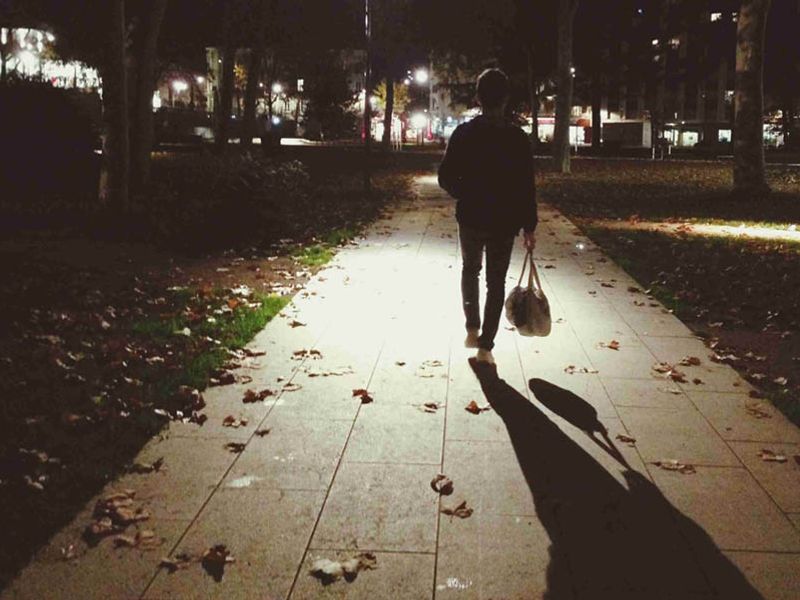
Understanding Violence: How It Works and What to Do About It
Most violence isn't a stranger in a car park. It's usually someone you know. Here's how violence works, why people freeze, and what actually helps.
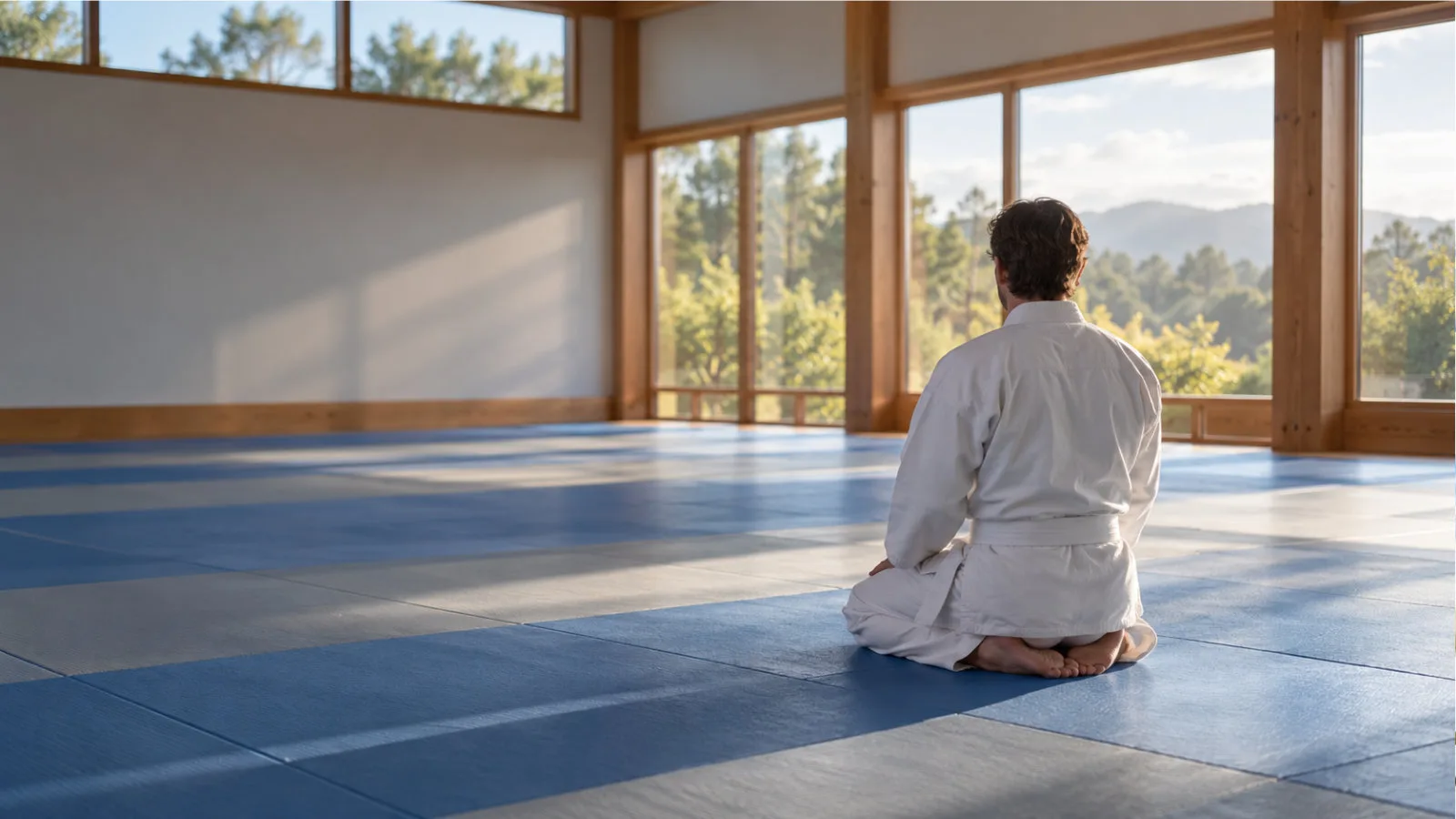
"Would I actually cope if something happened?" It's one of the most common questions we hear from people who train, and from parents thinking about their kids. Usually it comes with a picture of a stranger jumping out of the dark.
The honest answer is that real violence mostly doesn't look like that. In New Zealand it's usually someone the person knows, and it's as much about fear and control as fists. Understanding how violence works will protect you more than any single technique.
This guide is direct, but it isn't graphic. If any of it is close to home, the help lines are near the end.
What violence actually is
The World Health Organization defines violence as the intentional use of physical force or power, threatened or actual, against yourself, another person or a group, that causes or is likely to cause harm [1]. The key words are "or power". Violence doesn't need a punch.
That definition covers physical harm, sexual harm, and psychological harm such as threats, intimidation and control. Neglect counts too. These forms often happen together, especially between partners [1]. New Zealand's family violence law also treats psychological abuse as family violence, not as something milder.
Hot and cold: two very different kinds of violence
Researchers who study violence describe two broad modes. Reactive (also called affective) violence is hot. It comes with a pounding heart, anger or fear, and a sense of being threatened. Predatory (instrumental) violence is cold. It's planned, purposeful and often calm on the surface [2]. Plenty of real incidents are a mix of the two, so think of it as a scale rather than two boxes [2].
Hot violence often grows out of status: an insult, a bump at the bar, losing face in front of mates. Classic research on homicide found that many killings between men started as arguments over apparently trivial things like this [3]. Because hot violence runs on emotion and pride, it can often be talked down, or avoided by letting the other person "win" and walking away.
Cold violence is different. The person has already decided what they want, whether that's your wallet, control over you or something worse. Talking rarely changes their plan. Your job is to notice early, avoid being isolated, make noise and get to other people.
Why it happens and who is most at risk
Violence is partly learned
In Albert Bandura's well-known 1961 experiment, preschoolers who watched an adult hit and kick an inflatable doll were more aggressive with it afterwards than children who hadn't seen that [4]. It was a short lab study, so it has its limits. Still, decades of social learning research support the same basic point: people copy the behaviour they see, especially from adults they look up to.
Self-control matters, and it can grow
Otago's Dunedin Study followed about 1,000 people born in 1972 and 1973 from birth to age 32. Children with lower self-control were more likely as adults to have criminal convictions, along with poorer health and finances, even after allowing for IQ and family background [5]. The effect followed a gradient across the whole group, not just the children who struggled most. The researchers took this as a sign that even small improvements in self-control could help [5]. The study shows links, not proof of cause.
What the New Zealand numbers say
About 30% of adult New Zealanders were victims of a personal or household crime in 2024 [6]. Around 1 in 3 women and 1 in 8 men experience sexual assault in their lifetime, and women are 2.4 times more likely than men to experience intimate partner violence [7]. Wāhine Māori, rainbow women and disabled people face notably higher rates [7].
When sexual violence was reported to Police and a suspect was identified, about 79% of suspects were known to the victim and 16% were strangers [8]. That's why stranger-danger advice on its own misses most of the risk.
The warning signs, by type
Physical
Watch for rising anger or threats, damage to property, "accidental" shoves, and any injury that gets explained away. Violence usually escalates over time. It rarely stays at one push.
Emotional and psychological
This one is easy to miss because it's often quiet. Look for checking someone's phone, controlling their money, cutting them off from friends and whānau, constant put-downs, extreme jealousy, and making them feel they're the problem. If someone is walking on eggshells around a partner or parent, take that seriously.
Sexual
Pressure after a no, getting someone drunk to lower their guard, ignoring boundaries in small ways to test reactions, and isolating someone before making a move. Many people who use sexual violence test boundaries well before anything more serious happens.
Fear, adrenaline and the freeze
When your brain senses danger, your adrenal glands release adrenaline. Your heart races, your breathing quickens and your muscles tense up, ready to act [10]. Most people also notice tunnel vision, shaky hands, trouble speaking and clumsy fingers. That's normal. It's also why fine motor techniques often fall apart under real stress.
Fight or flight isn't the whole story. Humans have a set of automatic defence responses that runs from alertness to freezing, fighting or fleeing, and finally "tonic immobility", where the body shuts down and the person can't move or call out [11]. These responses are hard-wired. You don't choose them.
In a Swedish study of 298 women seen at an emergency clinic after sexual assault, 70% reported significant tonic immobility during the assault and 48% reported extreme immobility [12]. If you froze, your body was trying to keep you alive. It doesn't mean you agreed, and it isn't your fault.
Training can help here, honestly. Regular pressure, like sparring and drills done when you're tired, gets you used to adrenaline so it's less of a shock. It doesn't switch the freeze off, though, and nobody can promise you won't freeze.
Spotting trouble early, calming it down and leaving
Notice early. Trust the uneasy feeling. Watch for someone sizing you up, closing the gap, or a group splitting to go around you. Keep your phone in your pocket in the places that make you uneasy.
Calm it down. Keep your voice low and slow, hands open and up at chest height, and stand side-on with space between you. Don't insult, argue or try to win. Give the other person a way out that lets them save face: "All good, mate, my mistake."
Set boundaries out loud. A clear, firm "Stop. Back off." draws attention and tells everyone around what's happening. Predatory people usually want quiet and privacy.
Leave. If you can walk away, that's the win. Hand over your wallet, phone or car keys if someone demands them, because things can be replaced. Head towards light, people and open doors. In an abusive relationship, leaving can be the most dangerous time, so plan it with a specialist service rather than doing it alone.
For practical tips out and about, see our post Advice around personal safety in public.
Where to start, by stage of life
First, an honest word about martial arts. Good training builds fitness, confidence, awareness and composure under pressure, and those genuinely help. It is not therapy, and it's not a guarantee. A black belt doesn't make someone safe, and anyone promising that their system will is overselling. The best-tested programme we know of taught women to assess risk, recognise pressure and act early, with physical skills as one part. It cut completed rapes among first-year university students by 46% over a year [13]. Awareness and early action did most of the work.
Parents of younger children
Kids copy what they see, so how adults handle anger at home matters most. Teach body autonomy, that "no" is allowed, and that they should tell a trusted adult if anyone, including someone they know, makes them uncomfortable. A good kids' class builds self-control and confidence. See 24 reasons why your child should learn a Martial Art.
Teens and young adults
This is the highest-risk age for being on either end of a fight. Talk openly about alcohol, consent, status fights and filming incidents for social media. Pressure-tested training such as boxing, Muay Thai, BJJ or judo teaches what adrenaline feels like and why walking away is smarter.
Adults
Choose training with regular, safe, live practice against a resisting partner. Work on your mental strength as well as your technique. Women may find Best Martial Arts for Women a useful starting point.
Coaches and clubs
Know the help lines, and know what to do if a student discloses harm: listen, believe them, don't investigate, and connect them to specialists. Don't sell your style as a guarantee of safety.
Questions we get asked
Should I fight back if I'm attacked?
Only you can judge that in the moment. If you can get away or hand over property, do that. If you can't escape and you believe you'll be seriously hurt, fighting to create a chance to escape can be the right call. Either way, whatever you did to survive was the right call.
Is it legal to defend myself in New Zealand?
New Zealand law allows reasonable force to defend yourself or someone else, judged on the circumstances as you believed them to be. Carrying a weapon "for self-defence" is a different matter and can be an offence. This is general information, not legal advice.
I'm worried about my own temper. Where can I go?
Good on you for asking. Call 0800 456 450 or visit the Change is Possible website for anonymous support for people worried about their own behaviour [14]. Safe to Talk also supports people concerned about their own sexual thoughts or behaviour.
Where can someone in New Zealand get help?
• Emergency: 111 • Need to talk? Call or text 1737, any time • Women's Refuge: 0800 733 843 (24/7) • Safe to Talk (sexual harm): 0800 044 334, text 4334 (24/7) • Are You OK family violence information line (formerly It's Not OK): 0800 456 450, 9am to 11pm daily [14]
Your next step
Save one of those numbers in your phone today, for yourself or for someone you might need to help. If you'd like to build calm under pressure, find a club that trains honestly and doesn't oversell. Our guide How to Choose the Right Martial Art for You and our tips on choosing a club are a good place to start.
References
- Rutherford A, Zwi AB, Grove NJ, Butchart A. Violence: a glossary. Journal of Epidemiology and Community Health, 2007 (building on the WHO World Report on Violence and Health, 2002).
- Meloy JR. Affective and predatory violence: from evolutionary adaptation to psychiatric morbidity. Frontiers in Psychiatry, 2025.
- Daly M, Wilson M. Homicide. Aldine de Gruyter, New York, 1988. scirp.org
- Bandura A, Ross D, Ross SA. Transmission of aggression through imitation of aggressive models. Journal of Abnormal and Social Psychology, 1961 (via Classics in the History of Psychology, York University).
- Moffitt TE, Arseneault L, Belsky D, et al. A gradient of childhood self-control predicts health, wealth, and public safety. Proceedings of the National Academy of Sciences, 2011.
- Ministry of Justice. New Zealand Crime and Victims Survey released (Cycle 7). Ministry of Justice, 2025.
- Ministry for Women. Women's safety: data and research. Ministry for Women, accessed 2026.
- Ministry of Justice. Attrition and progression of reported sexual violence victimisations in the criminal justice system, 2017 to 2022. Ministry of Justice.
- Glass N, Laughon K, Campbell J, et al. Non-fatal strangulation is an important risk factor for homicide of women. Journal of Emergency Medicine, 2008.
- Harvard Health Publishing. Understanding the stress response. Harvard Medical School.
- Kozlowska K, Walker P, McLean L, Carrive P. Fear and the defense cascade: clinical implications and management. Harvard Review of Psychiatry, 2015.
- Möller A, Söndergaard HP, Helström L. Tonic immobility during sexual assault: a common reaction predicting post-traumatic stress disorder and severe depression. Acta Obstetricia et Gynecologica Scandinavica, 2017.
- Senn CY, Eliasziw M, Barata PC, et al. Efficacy of a sexual assault resistance program for university women. New England Journal of Medicine, 2015.
- Ministry of Justice. Where to get help for family violence or sexual violence. Ministry of Justice.