What Happened to Karate? Finding Its Original Purpose
Karate began on Okinawa as a practical way to protect yourself. A century of schools, gradings and tournaments changed what many dojos teach, but the original purpose hasn't vanished. Here's where it went, why a black belt is no self-defence guarantee, and what to look for in a club.
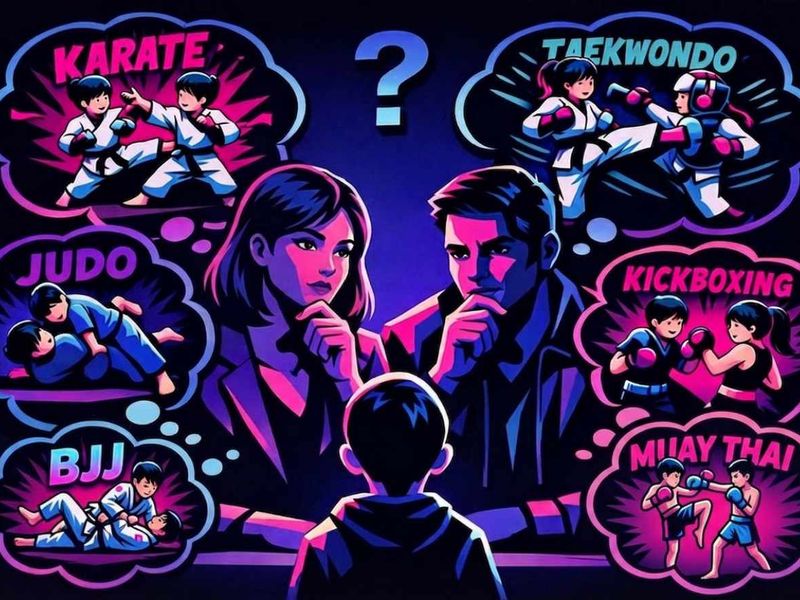
"Karate's just kids in white suits doing dance moves now." We hear this in the shop more often than you'd think.
The honest answer is that they have a point, but only half of one. Karate began as a practical way to protect yourself, and a lot of modern training has drifted away from that. The original purpose hasn't disappeared, though. You just have to know where to look.
A fighting art from a small island
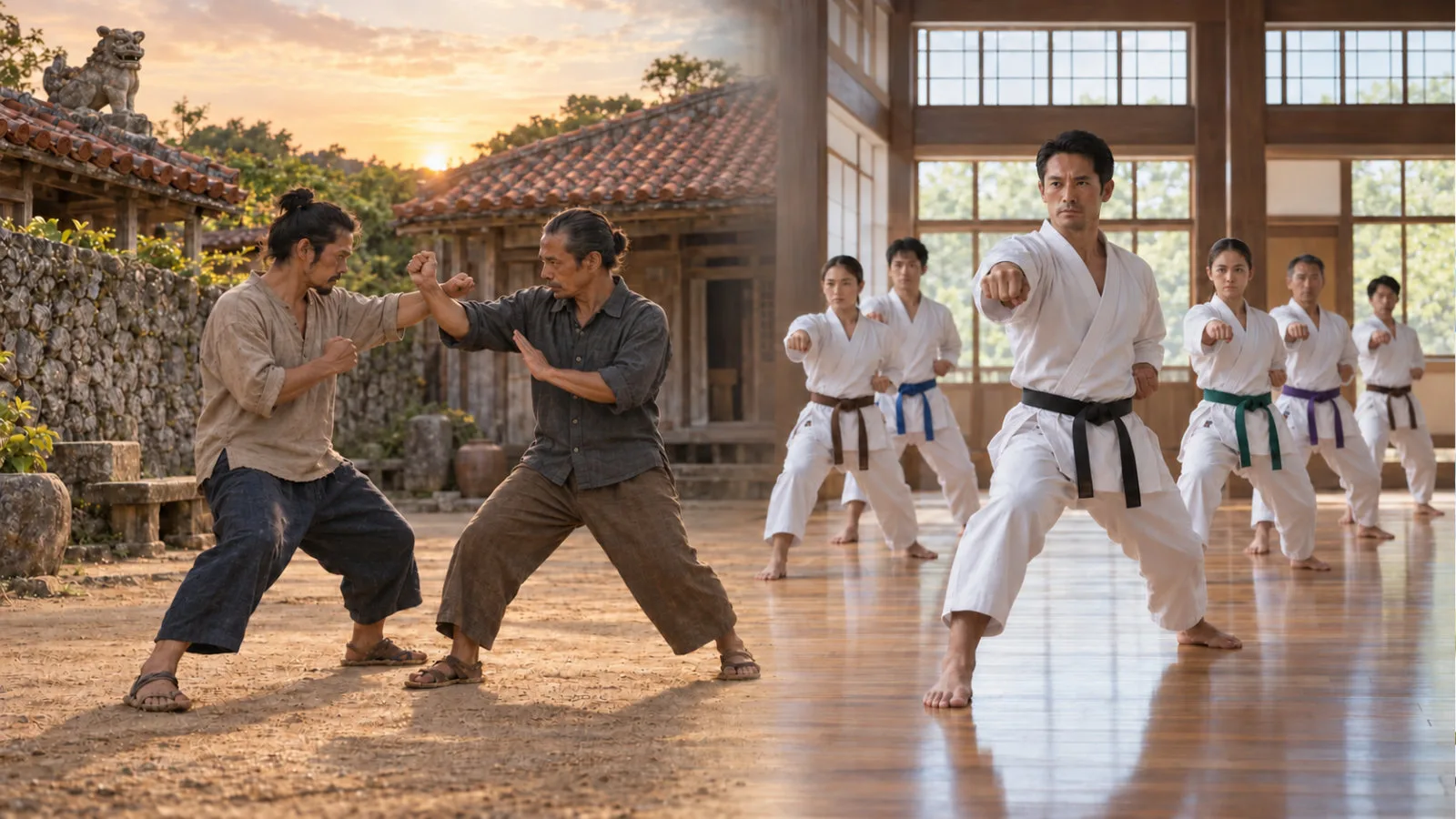
Karate comes from Okinawa, the main island of the old Ryūkyū Kingdom, which is now part of Japan [1]. For centuries local fighting methods mixed with Chinese martial arts brought in through trade. The result was called tōde or simply te, meaning "hand".
It was taught quietly, often one teacher to a few students. Training centred on kata, which are set sequences of movements, along with partner drills and body conditioning. The point was plain: deal with a real attacker, up close, without a weapon.
Kata weren't a performance. They were a way of storing fighting techniques so they could be practised alone and passed on. Working out what each movement is for, and testing it on a partner, is called bunkai (application). Keep that word in mind, because it's at the heart of this story.
Into the classroom with Itosu
The first big change came in the early 1900s. Ankō Itosu, a respected Okinawan teacher, pushed to have karate taught in schools. In 1908 he wrote to the prefectural education authorities proposing it become a school subject [2]. His letter talked up karate's value for health, fitness and building strong young men for national service.
Itosu created the Pinan kata (called Heian in Shotokan) and helped shape group drills suited to big classes of children. Many karate historians and teachers argue that the more dangerous applications were played down or left out for schoolkids. That's a reasonable reading, but it's still debated.
What's clear is the shift in focus. Karate was now also physical education, taught to rows of students by count.
From Tokyo to the Olympics
In 1922 Gichin Funakoshi, one of Itosu's students, demonstrated karate at a Ministry of Education physical education exhibition in Tokyo [3]. It went down so well that he stayed.
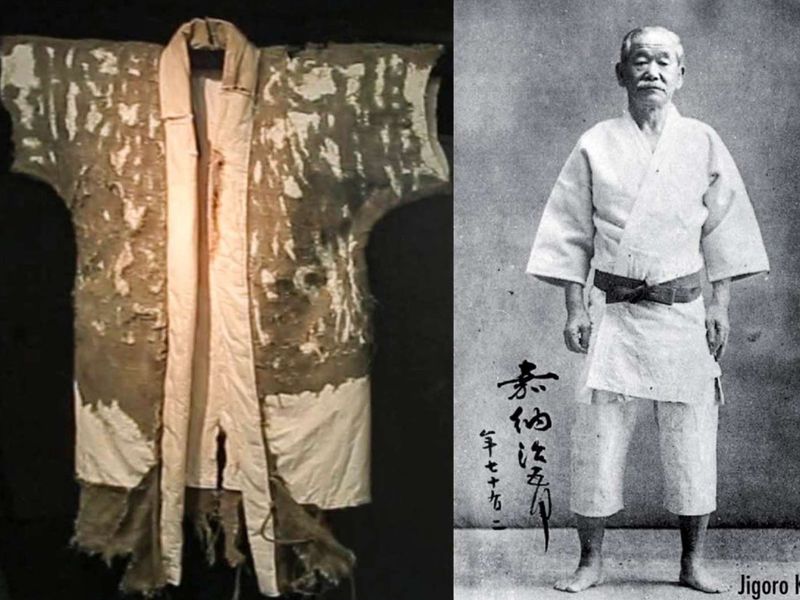
To fit in with Japanese martial arts, karate borrowed judo's habits. Funakoshi issued the first karate dan (black belt) certificates in April 1924 [3], and a judo-style uniform became standard. Our history of the dogi and karate black belt guide cover both. In 1936 Okinawan masters agreed to write the name as "empty hand" (空手) rather than "Chinese hand" (唐手) [4].
Funakoshi stressed character, the idea behind the dojo kun many clubs still recite. But he never claimed kata alone was fighting. One of his twenty precepts makes the gap clear:
"Perform kata exactly; actual combat is another matter."
After the Second World War, university clubs and national bodies turned karate into a sport, with championships and protective gear from the 1950s [5]. That road led to the Tokyo 2020 Olympics, where karate debuted with kata and kumite (sparring) events [6].
This is where we think many modern dojos have drifted. When a club revolves around gradings and tournaments, training follows what gets marked. Kata get polished for judges rather than understood. Sparring rewards light, fast scoring strikes rather than stopping someone who keeps coming. None of that is wrong, but it isn't what Okinawan karate was originally for.
Kyokushin: putting the contact back
Masutatsu "Mas" Oyama trained in Shotokan and Goju-ryu before formally founding Kyokushin in Tokyo in 1964 [7]. So Kyokushin isn't a break from tradition. Its kata and basics come straight from those two styles.
What Oyama changed was the testing. Kyokushin brought in full-contact "knockdown" fighting: bare knuckles, hard kicks to the legs and body, and wins decided by actually hurting or dropping an opponent. Kyokushin reached New Zealand early, with its first club opening in 1965 [8].
Is it a return to the original intent? Partly. It brings back pressure and real impact. But its competition rules ban punches to the face and grabbing. Those rules keep fighters safe, and they also build habits that wouldn't serve you well on the street. Kyokushin is the clearest example of a different approach, not the only "real" karate.
The hard truth about self-defence
Lots of clubs advertise self-defence. Our honest view, from years around dojos and the people who train in them, is that most karateka, including many black belts, would struggle to defend themselves against a determined attacker. That's our observation, not a measured fact.
Real assaults tend to be sudden, close and messy, and researchers have found they look quite different from what's practised in training [9]. Fear also changes how you move. In one study, police officers performed self-defence skills noticeably worse when the knife attacking them could deliver a real shock, flinching and pulling away [10]. Solo kata and point sparring with a cooperative partner don't prepare you for that. We cover this in more depth in understanding violence: how it works and what to do about it.
That doesn't make karate pointless. Fitness, confidence, timing and staying calm under pressure all help, and training against resisting partners under some stress helps more. But no style, belt or number of years guarantees you can protect yourself. In a real threat, the best result is still to spot trouble early, get away and call 111.
How to tell what a club really teaches
Plenty of Goju-ryu, Uechi-ryu, Shito-ryu, Shotokan and Shorin-ryu clubs never lost the thread and still teach bunkai, partner drills and conditioning. Research on European karate found sport is only one direction the art has taken [11]. About 15 types of karate are practised in New Zealand, and not all belong to Karate New Zealand [8], so the style name on the door tells you less than how a club trains.
Whether it's for you or your child, watch a class or two before signing up, and notice what the time is spent on.
- Kata: are applications practised with a partner, or is kata only drilled solo for gradings? Our tips to improve your kata explain why understanding beats memorising.
- Sparring: what contact level is used, and how do beginners and children build up to it safely?
- Self-defence: is it tested against a resisting partner, and is the instructor honest about its limits? Be wary of any club that promises your child will be able to defend themselves.
- Gradings: are they earned over time, or is a new belt guaranteed every few months?
For parents, a sport-focused club can be a good choice, and Sport NZ's Balance is Better approach is a useful guide to whether a club puts kids' enjoyment and long-term development first [12]. Our guide to choosing the right martial art for you or your child covers the wider picture.
Questions we get asked
Will karate teach me to defend myself?
It can help, but it's no guarantee. Look for training against resisting partners and honest talk about real violence. Most of all, value awareness and getting away over fighting.
Is Kyokushin too hard for kids?
Not necessarily. Most clubs run children's classes with protective gear and controlled contact. Watch a junior class and ask how they manage contact for each age group.
Does style matter more than the instructor?
Usually the instructor matters more. Visit and trust what you see on the mat. The long and the short of it Karate began on Okinawa as a practical way to protect yourself, with kata as its training manual. Schools, black belts and sport rules shifted many clubs towards fitness, gradings and points. Kyokushin brought back full contact, but it grew from Shotokan and Goju-ryu, and many traditional clubs still teach bunkai. No style or belt guarantees you can defend yourself. Be wary of any club that says it does. Judge a club by how it trains, not by its style name or belt count.
Your next step
Pick two or three karate clubs near you and book trial classes. Take the questions above with you, and ask to see a kata applied with a partner.
Save with a kit
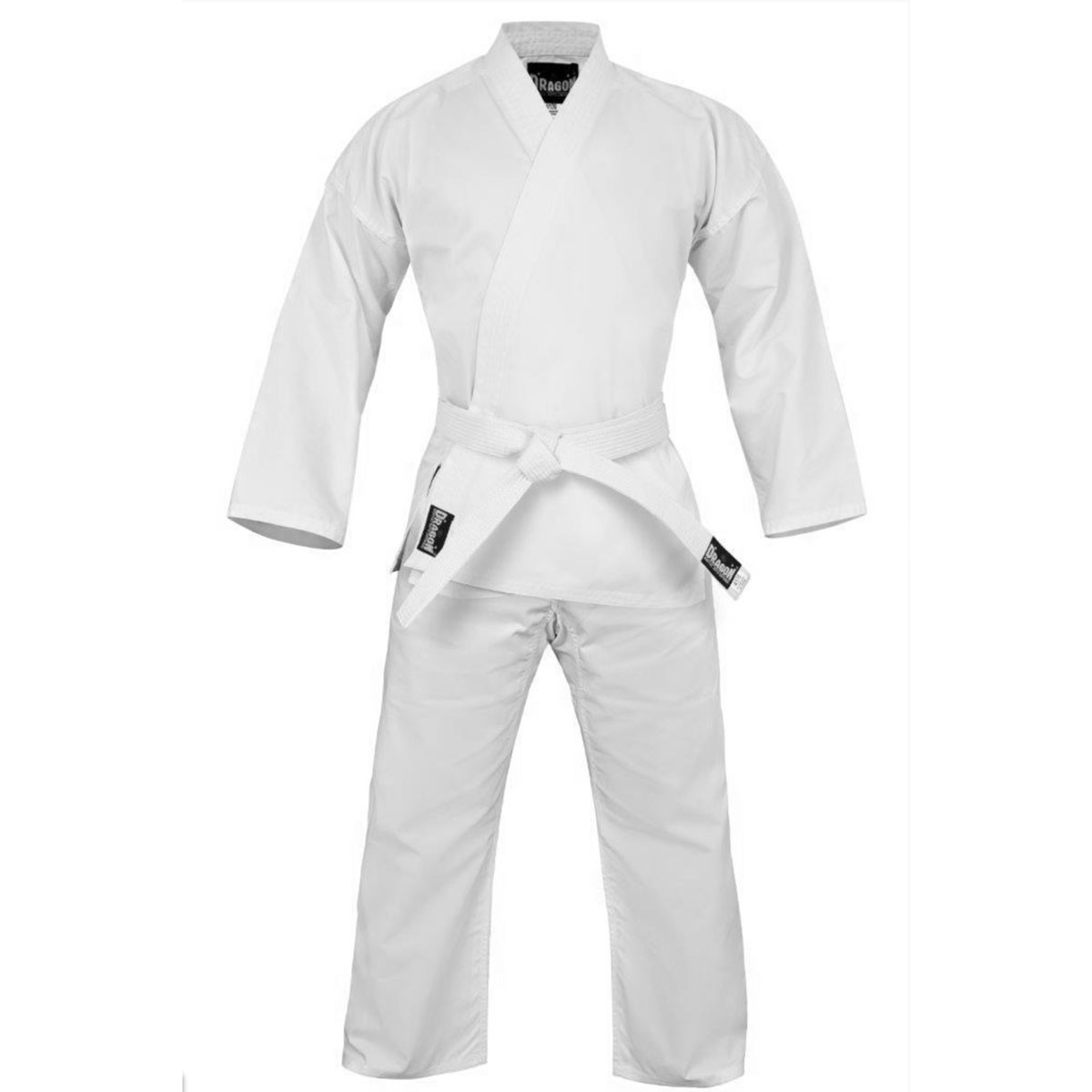 Kit priceKarate Starter Kit
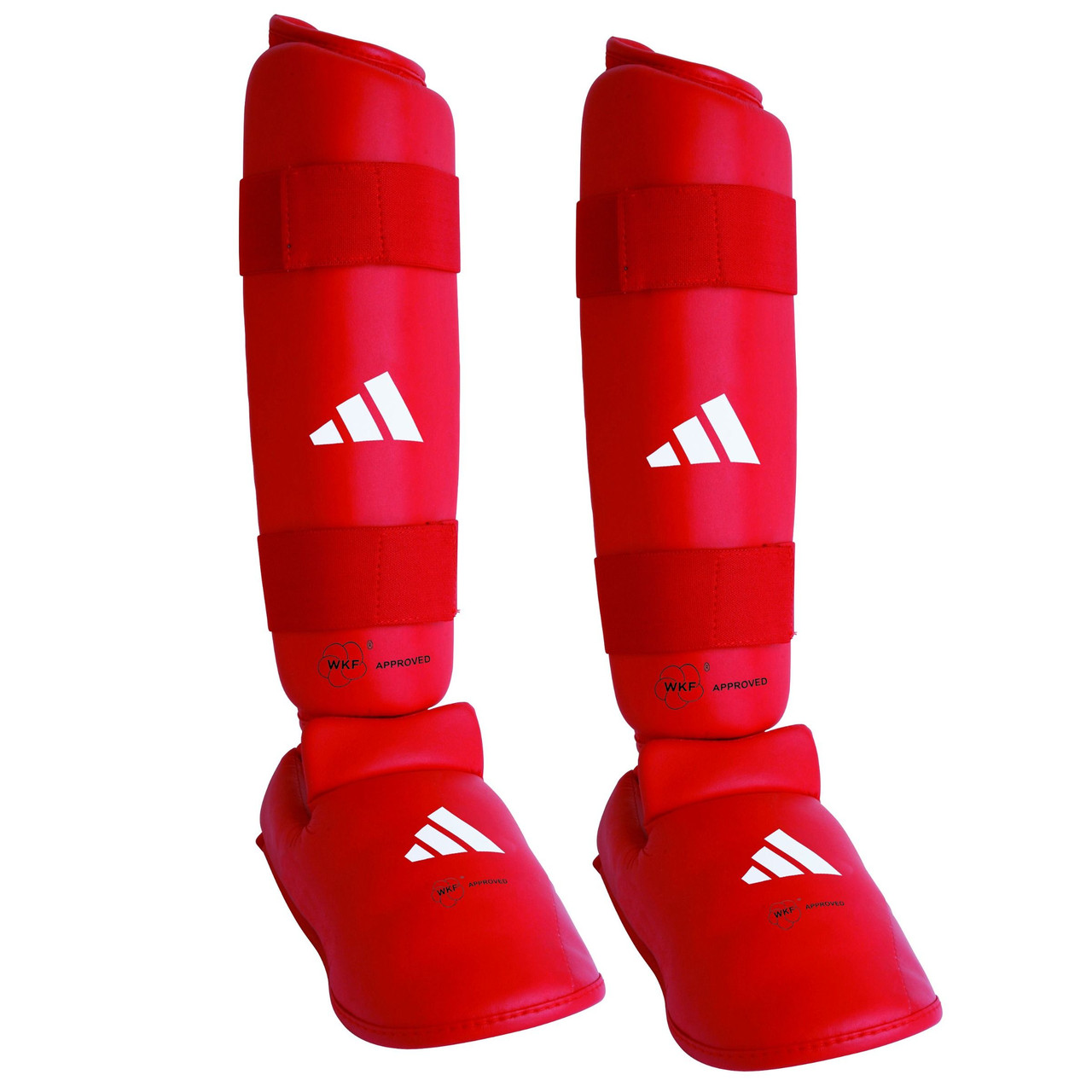 15% off as a kitWKF-Approved Kumite Competition Kit - Red
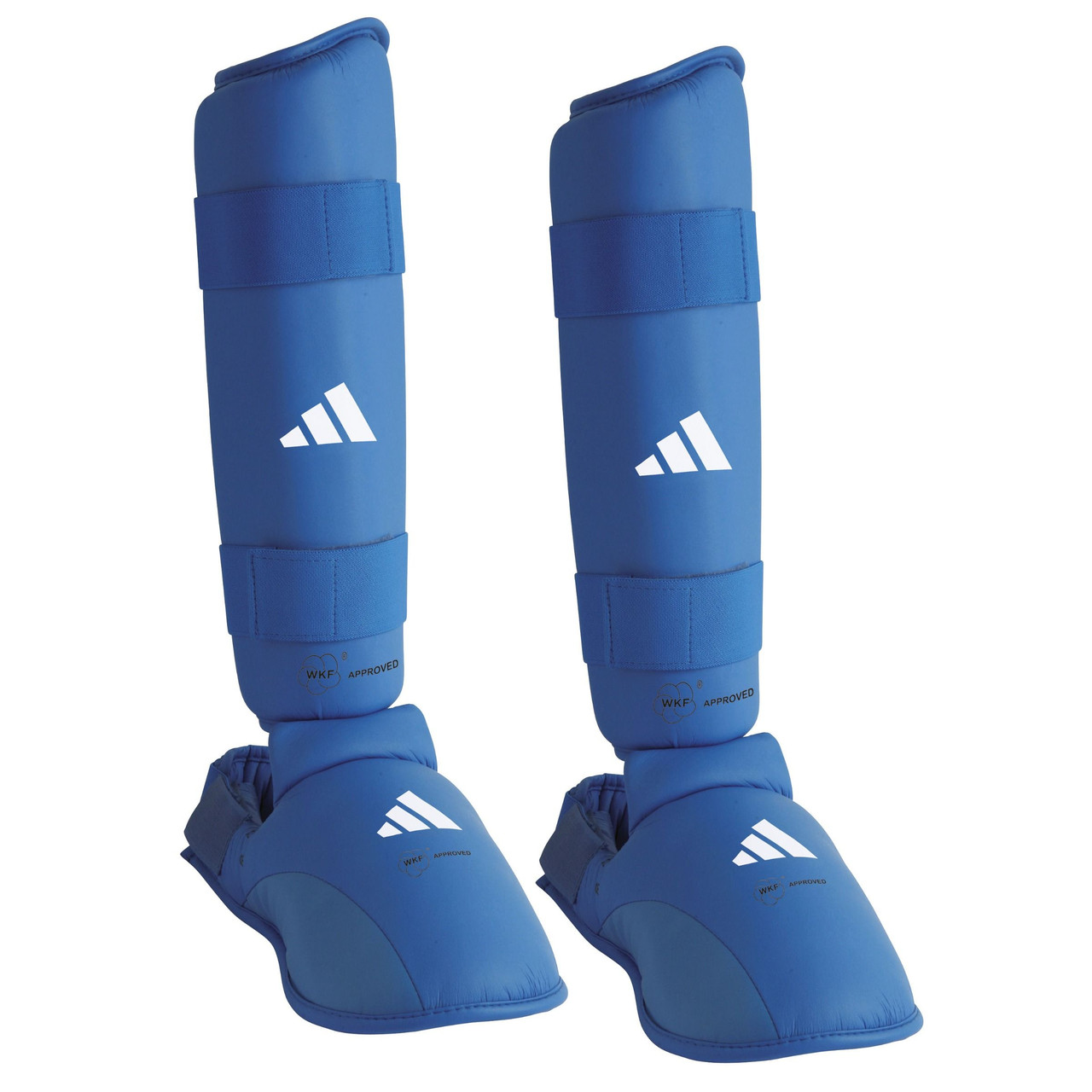 15% off as a kitWKF-Approved Kumite Competition Kit - Blue
References
- Okinawa Karate Kaikan. About Okinawa Karate Kaikan. Okinawa Karate Kaikan, accessed 2026.
- Gottner, R. G. The Ten Precepts of Learning about Karate: Translation and Analysis of the Letter of Itosu Ankō. Távol-keleti Tanulmányok 14(2), Eötvös Loránd University, 2022.
- Japan Karate Association. Supreme Master Funakoshi Gichin. JKA, accessed 2026.
- Ryukyu Shimpo. Karate Day: Over 2,000 people including children perform in Naha. Ryukyu Shimpo, 2015.
- Oliveira, M. A., Lopes, J. C., Sonoda-Nunes, R. J. and Figueiredo, A. The sportivization process of a martial art: the karate. Revista de Artes Marciales Asiáticas 14(2s), 2019.
- Olympics.com. Karate's cherished Olympic debut at Tokyo 2020 Olympics. International Olympic Committee, 2021.
- International Federation of Karate Australia. About Kyokushin. IFK Australia, accessed 2026.
- Dalley, B. Martial arts. Te Ara, the Encyclopedia of New Zealand, Manatū Taonga Ministry for Culture and Heritage, 2012 (updated 2015).
- Staller, M. S., Zaiser, B. and Körner, S. From Realism to Representativeness: Changing Terminology to Investigate Effectiveness in Self-Defence. Martial Arts Studies 4, Cardiff University Press, 2017.
- Renden, P. G., Landman, A., Geerts, S., Jansen, S., Faber, G., Savelsbergh, G. J. P. and Oudejans, R. R. D. Effects of anxiety on the execution of police arrest and self-defense skills. Anxiety, Stress & Coping 27(1), 2014.
- Cynarski, W. J. The European karate today: the opinion of experts. Ido Movement for Culture. Journal of Martial Arts Anthropology 14(3), 2014.
- Sport New Zealand. Parents and caregivers. Sport NZ, accessed 2026.