How to Wash and Care for Your BJJ Gi and No-Gi Kit
A sweaty gi left in your bag is how ringworm and school sores get passed around the mats. Here's how to wash your gi, rashguards, spats and belt so they stay clean, keep their size and last longer.
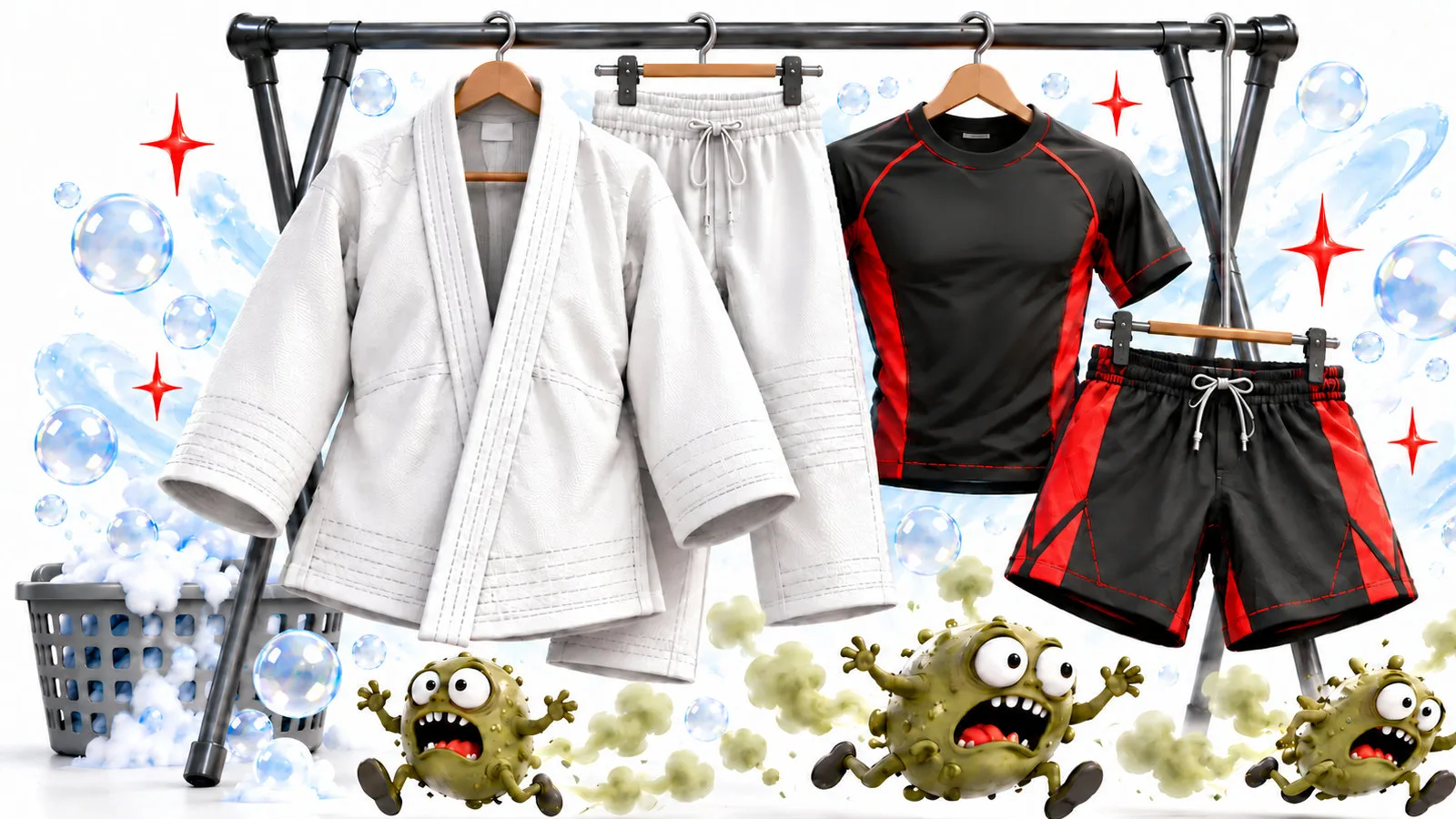
You've just finished a hard class, your gi is soaked, and it's tempting to zip the lot into your bag and deal with it tomorrow. Parents know this one too: the kids' gi turns up at the bottom of the bag three days later.
The honest answer is simple. Wash everything you trained in after every session, wash it cold, and dry it completely before you wear it again. That keeps your kit lasting longer and it's one of the best ways to keep skin infections off the mats.
Why clean kit matters on the mats
Ringworm (tinea) is a fungal skin infection, not a worm. It spreads through direct contact and through shared clothing, towels and gear, and the fungus can survive on these items for a long time [1][2]. When it spreads between grapplers it's often called tinea gladiatorum.
School sores (impetigo) are a bacterial skin infection caused by strep or staph bacteria [3]. The CDC lists sharing uniforms and towels, and not washing uniforms after each use, as ways a resistant staph infection called MRSA spreads among athletes [4]. One small study of a college wrestling team found ringworm cases dropped sharply once the team followed a strict hygiene routine [5].
Clean kit is only part of it. Shower after training, keep cuts covered, and if you or your child has a rash or a weeping sore, see your pharmacist or GP before training again.
What you need
- A washing machine with a cold or gentle cycle (a front loader is kinder to heavy gis, but a top loader is fine).
- A normal laundry detergent. No fabric softener.
- A clothes line, airer or hangers somewhere with good airflow and some shade.
- A second gi, so one can dry while you train in the other.
Washing your gi after every session
- Get it out of your bag as soon as you get home. Hang it up if you can't wash it straight away.
- Turn the jacket and pants inside out. This protects patches, printing and the outer weave, and puts the sweatiest side towards the water.
- Tie the pants drawstring loosely in a bow. This stops it pulling out of the waistband in the wash.
- Wash on cold with normal detergent. Don't overload the machine; a heavy gi needs room to move to get clean.
- Leave out the fabric softener. It coats the fibres, which can make a gi less absorbent and can hold onto smells.
- Hang it to dry inside out, out of direct sun. Strong UV fades colour and weakens cotton over time.
- Make sure it's completely dry before you wear it or pack it. Damp cotton in a closed bag is where smells and mould start.
Why gis shrink
Most BJJ gis are cotton, and cotton shrinks with heat. Hot washes and tumble dryers are the usual culprits, and the first few washes are when you'll see the most change. Even gis sold as "pre-shrunk" can tighten a little.
Wash cold from day one. Some people shrink a too-long gi on purpose with a warm wash, but it's hard to control and you can't undo it.
When health advice comes first
Here's the honest catch. NZ health advice for ringworm says to wash sports gear in hot water and dry it well [1], and the CDC suggests drying uniforms completely in a dryer [4]. Gi makers say cold and air-dry to protect the fabric.
For everyday training, cold wash and a thorough dry is fine. If someone in your household or club has ringworm or school sores, follow the health advice, wash hot and accept a bit of shrinkage.
Rashguards, spats and shorts
No-gi kit is usually polyester and spandex (elastane). It dries fast and doesn't shrink like cotton, but heat is its enemy. Hot water and dryers break down the stretch fibres, which is why old rashguards go baggy and spats lose their grip.
- Wash cold on a gentle cycle, inside out, ideally in a mesh bag.
- Keep them away from velcro on shorts or bags, which snags the fabric.
- Skip fabric softener here too.
- Hang to dry in the shade. Synthetics dry quickly, so there's no need for the dryer.
The rashguard under your gi takes most of the sweat, so it needs washing every session too.
Your belt: tradition versus hygiene
You may have heard you should never wash your belt because it "washes away" your hard work. It's a nice story, but your belt soaks up sweat, gets gripped and often ends up near your partner's face. Most coaches today are happy for belts to be washed.
A sensible middle ground: air your belt out after every class and wash it every so often, and straight away if someone in the club has had a skin infection. Wash it cold and dry it in the shade. If your club has a strong view, ask your coach.
Habits that keep kit fresh and make it last
- Own at least two gis. If you train three or more times a week, a single gi rarely has time to dry properly between sessions.
- Air out your bag. Empty it after every class, leave it open to dry, and wipe it out now and then. A clean gi in a smelly bag doesn't stay clean for long.
- Use a separate bag for wet kit. It keeps sweaty gear away from your clean towel.
- Repair small tears early. A few stitches on a split seam or loose patch saves a gi from a bigger rip.
- For parents: make "bag out, gi in the wash" part of the routine as soon as you get home, and give your child's skin a quick look while you're at it.
Questions we get asked
Can I put my gi in the dryer if I'm in a hurry?
We wouldn't. Even one hot cycle can shrink a cotton gi. If you're stuck, use the lowest heat briefly, then finish on a hanger.
How many gis do I really need?
Once or twice a week, one gi can work if you wash it straight after class. At three or more sessions, two is the practical minimum.
My gi still smells after washing. What can I do?
Usually it was left damp too long, or softener has built up. Rewash it and dry it fully in fresh air. Some people swear by a white vinegar soak, but we haven't seen good evidence for it. If the smell keeps coming back, the gi may be due for replacing.
Should my child train with a rash or a sore?
Not until a health professional has checked it. KidsHealth advises keeping children with school sores home until one day after treatment starts [6]. Let the coach know too, so they can keep an eye on the rest of the class.
Do I need a special sports detergent?
No. Normal detergent is fine. Washing straight after training and drying completely matter far more.
Your next step
Check your gi and rashguard today. If the collar is cracked, the knees are worn through or the smell won't wash out, it's time to replace it. Have a look at Zenjo's BJJ gis and rashguards, and think about getting a spare set so you always have a clean, dry one ready for class.
Save with a kit
 Free CORE Animal Patch of your choiceCORE Foundation Blue Kids BJJ gi with FREE Patch $135.00Get your child rolling in style. Comes with a FREE Animal Patch.
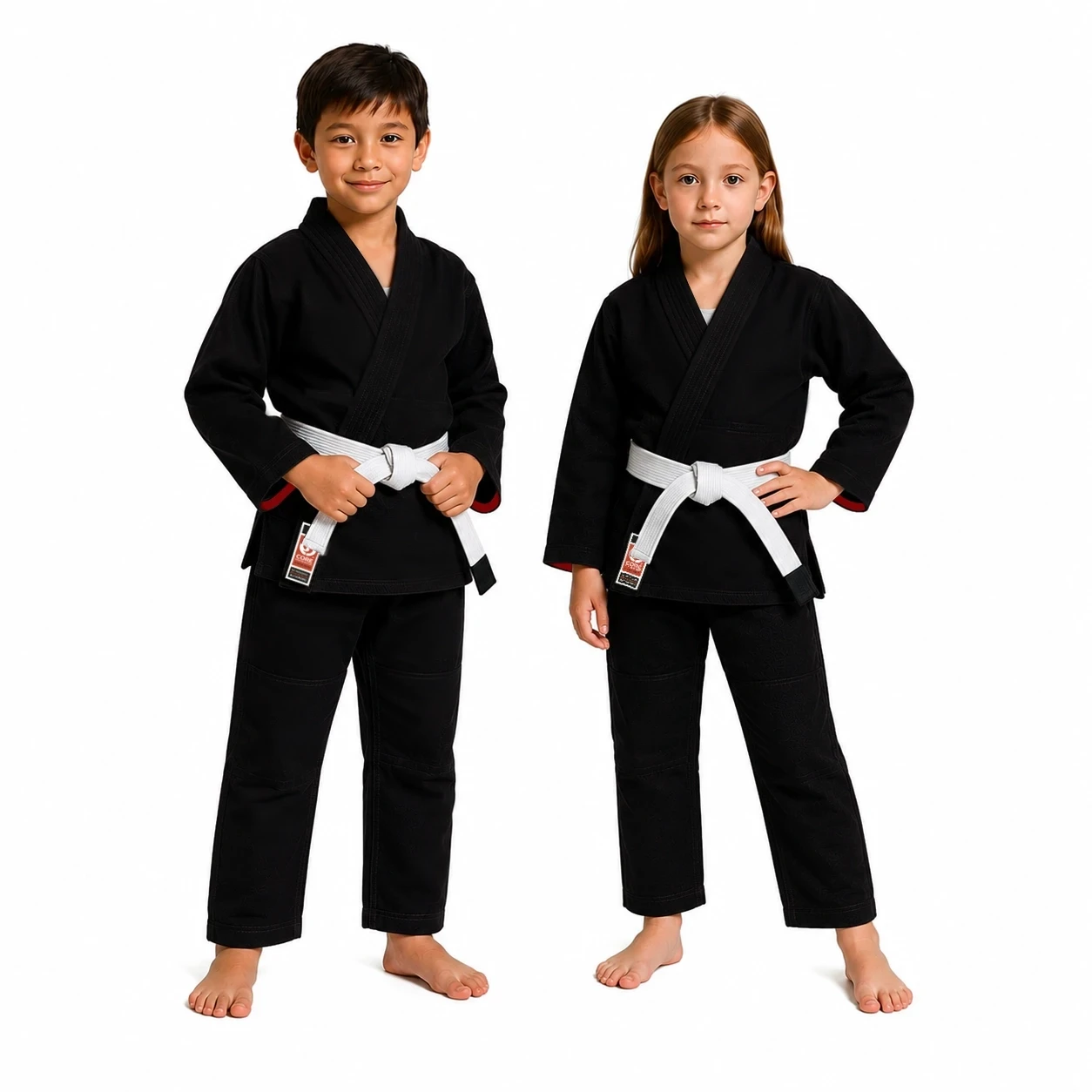 Free CORE Animal Patch of your choiceCORE Foundation Black Kids BJJ gi with FREE Patch $135.00Get your child rolling in style. Comes with a FREE Animal Patch.
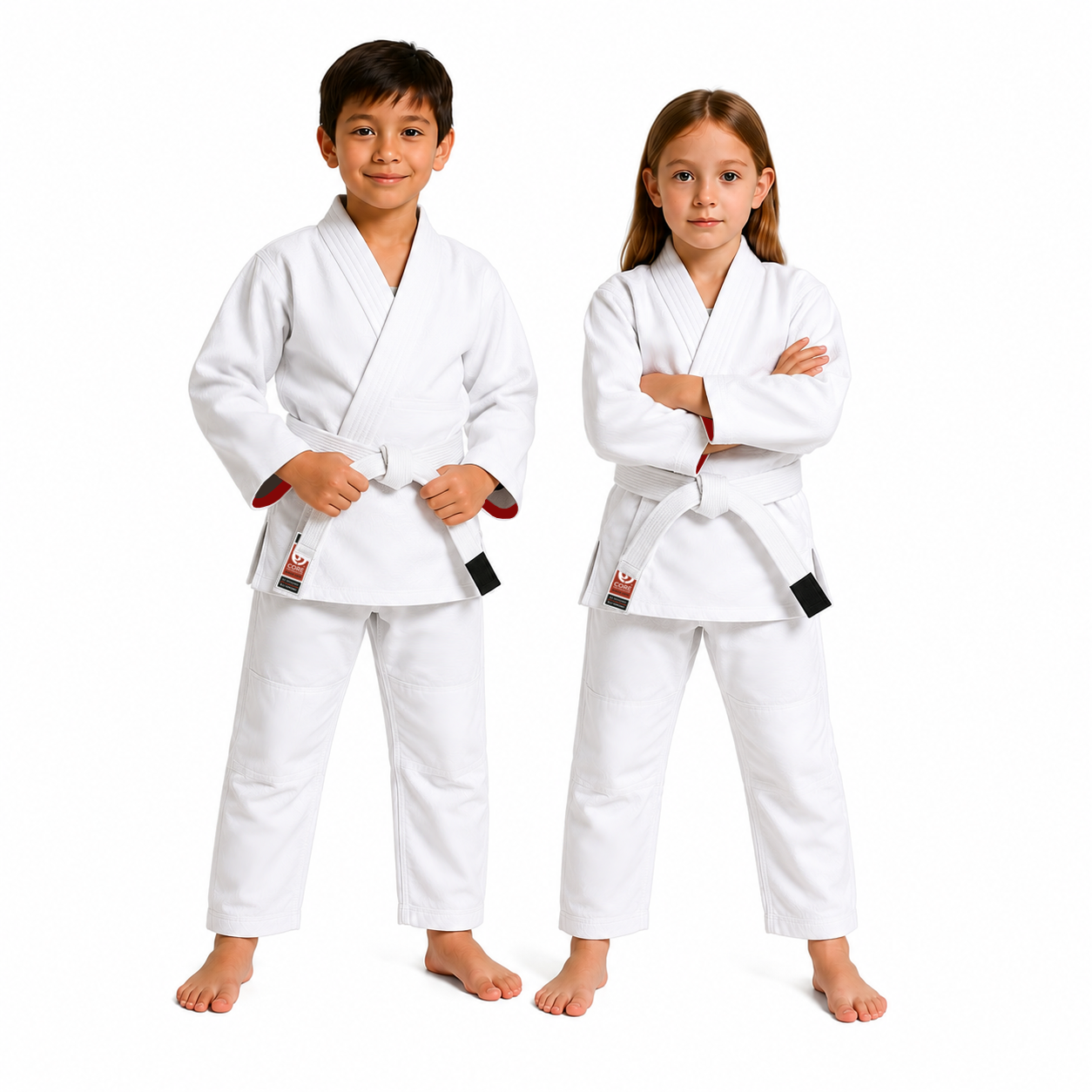 Free CORE Animal Patch of your choiceCORE Foundation White Kids BJJ gi with FREE Patch $135.00Get your child rolling in style. Comes with a FREE Animal Patch.
References
- Healthify He Puna Waiora. Ringworm of the body. Healthify, reviewed 2026.
- KidsHealth New Zealand. Ringworm in children. KidsHealth, reviewed 2026.
- Healthify He Puna Waiora. School sores (impetigo). Healthify.
- Centers for Disease Control and Prevention. Athletes: MRSA Prevention and Control. CDC.
- Hand JW, Wroble RR. Prevention of tinea corporis in collegiate wrestlers. Journal of Athletic Training, 34(4):350–352, 1999.
- KidsHealth New Zealand. School sores in children. KidsHealth.