Muay Thai Shorts: Why They're So Short, Where They Came From and How to Choose a Pair
Muay Thai shorts are short for a reason: high kicks, knees and clinch work. Here's a quick history, what the colours and designs actually mean, what they're made of, and how to get the size right before you buy.
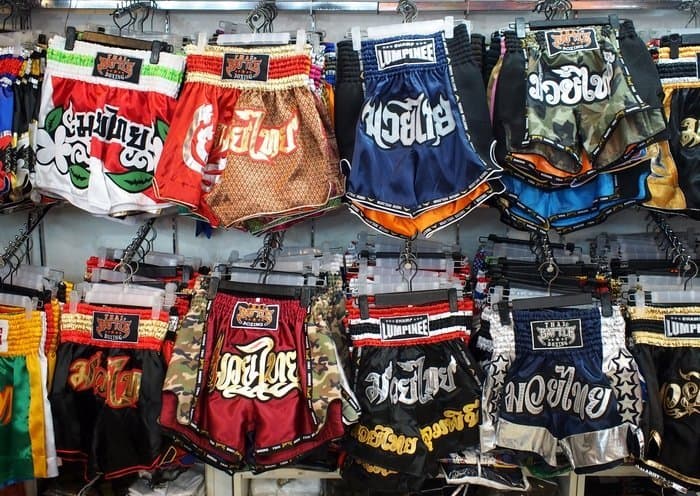
Walk into any Muay Thai gym and the shorts are the first thing you notice: short, wide in the leg, shiny and often loud. They look like a fashion statement, but the cut came from what the sport asks of your legs.
This guide covers why they're cut the way they are, where they came from, what the colours and designs actually mean, and how to choose and look after a pair.
Why Muay Thai shorts are so short
Muay Thai is called the art of eight limbs because it uses fists, elbows, knees and shins. A lot of that work happens from the hips down. You throw roundhouse kicks to the head, drive knees in the clinch, check kicks by lifting your shin and teep (push kick) to keep distance. Longer or tighter shorts catch on the thigh every time you lift your leg.
So the design does three jobs:
- Short, wide legs sit well above the knee and flare out. Many have side splits, so the fabric opens up when you kick instead of pulling against you.
- Light fabric doesn't hold much sweat or weight, which matters in long pad rounds and in a hot gym.
- A wide elastic waistband, usually around 10 cm, stays put when you're kicking hard or being pulled around in the clinch. Most also have a drawstring.
It's a different approach from gi-style uniforms, like a karate or judo gi, which are built from heavy cotton to be gripped and to last. Muay Thai has no gripping of clothing, so the shorts only have to stay out of the way.
Where Muay Thai shorts came from
Thai boxing has been around for centuries, but its early history is thinly documented, and historians argue over how much of the popular story is legend [1]. What's well supported is that the modern sport, and the shorts, took shape in Bangkok in the early 20th century.
Before then, fighters generally fought in the everyday clothing of the time. For Thai men, that was usually the chong kraben, a long cloth wrapped around the waist and pulled through the legs, or a simpler loincloth [2], [3]. Some wore a groin guard of shell or bark held in place with cloth [4]. Don't confuse this with kard chuek, which means "rope-bound" and refers to the hemp or cotton rope wound around the hands and forearms [5]. One was clothing, the other was the forerunner of the glove.
From the 1920s, Muay Thai moved into Western-style boxing rings, and rope bindings gave way to boxing gloves [4], [6]. Formal rules followed. A 1937 set of rules from the Education Department specified boxing shorts, gloves and groin protectors, and the big Bangkok stadiums adopted rules based on them [4]. Shorts arrived as part of that package from Western boxing. The bright, wide-leg satin look most people picture now developed later as the stadium scene grew.
Our guides to wrapping your hands for Muay Thai and hand wraps for training and fights pick up the story of what replaced the ropes.
What the colours and designs mean
You'll often read that each colour on Muay Thai shorts has a fixed meaning, such as red for energy or blue for calm. That's not really how it works.
Corner colours
In a fight, colour mostly tells you which corner a fighter is in. Under World Muaythai Council rules, the red corner wears red, pink, maroon or white shorts, and the blue corner wears blue, navy or black [7]. In Thai stadiums the red corner traditionally goes to the favourite, but that's custom, not a rule. If you're entering a bout in New Zealand, check what your event asks for. Many fighters own one red pair and one blue pair for this reason.
Colours of the day
Thai culture links each day of the week to a colour: red for Sunday, yellow for Monday, pink for Tuesday, green for Wednesday, orange for Thursday, light blue for Friday and purple for Saturday [8], [9]. Many Thais know the day they were born and treat that colour as lucky. Some fighters pick shorts in their birth-day colour, which is one reason pink is so common in Muay Thai.
Names, script and motifs
Look at fight shorts in a Thai stadium and you'll mostly see the fighter's name or gym name, often in Thai script, plus sponsor logos and the words "Muay Thai" (มวยไทย). Mythical creatures are less common on fight-night shorts than you might expect. They turn up more on retail and designer shorts, where they give a pair some cultural character:
- Naga: the serpent spirit linked to water and protection, seen all over Thai temples.
- Hanuman: the monkey warrior from the Ramakien, Thailand's version of the Ramayana, often linked to courage and loyalty.
- Hongsa: a sacred swan-like bird, a traditional symbol of the Mon people of Thailand [10].
Our exclusive TUFF Muay Thai shorts, handmade in Thailand, include Naga, Hongsa and tiger designs if you'd like a pair with a story behind it.
Satin, polyester or microfibre: what they're made of
Satin isn't a fibre. It's a weave that gives fabric its smooth, shiny face. Almost all Muay Thai shorts are polyester satin. Silk is rare in fight shorts because it's expensive and doesn't stand up to sweat and washing as well. Here's how the main types compare:
- Traditional polyester satin: the classic shiny Thai look, usually with embroidered or stitched lettering. It's smooth on the skin and tough, though it's a bit heavier and holds sweat longer than newer fabrics. Our Morgan shorts use a satin finish [11].
- Lightweight polyester: similar cut, lighter feel, often printed or with a small logo. Venum's Classic shorts are 100% polyester and made in Thailand [12].
- Microfibre: very light and quick-drying, and it takes detailed printed designs well. Our TUFF shorts are microfibre [10].
Muay Thai shorts aren't compression wear. They're meant to be loose. If you want support or less chafing, wear compression shorts or spats underneath, and a groin guard for sparring. Our beginner's guide to protective gear covers what you'll need.
If you also train MMA or do takedowns, Thai shorts can ride up or tear in groundwork. Hybrid or MMA fight shorts are a better fit for that. Many Muay Thai and kickboxing clubs in New Zealand are happy with either, so check with your coach.
How to get the size right
Most sizing problems come from buying Thai shorts in your usual clothing size. Thai-made shorts often run small compared with New Zealand sizes, and every brand is a little different.
- Measure your waist and hips. Use a soft tape on bare skin. Your natural waist sits above the belly button, and your hips are measured over the widest part of your backside. Our how to measure yourself guide shows where.
- Go by the brand's size chart, not the letter. An M in one brand can be an L in another.
- Size for your hips. The elastic waistband covers a range, but if the shorts are tight across the hips or thighs, they'll pull when you kick. If you're between sizes, go up.
- Check the brand's advice. Venum, for example, suggests one size larger for a fitted look or two sizes larger for a looser fit [12].
- Do a kick test. If you're trying them on in store, lift a knee high and swing a slow kick. Nothing should pull, and the waistband shouldn't slide down.
The shorts are unisex. Women often find sizing by hips works best, and the wide leg suits most body shapes. Some brands make women's cuts with a slightly shorter leg if you want one.
Looking after your shorts
Satin and printed shorts last for years if you treat them gently. The usual killers are hot washes and the dryer.
- Wash cold, inside out. This protects embroidery and printed designs. Some makers recommend hand washing; our TUFF shorts say hand wash cold and drip dry [10].
- Skip the dryer and the iron. Heat can melt satin, shrink the elastic and crack prints. Venum's care label says do not iron [12].
- Don't leave them in your bag. Wet shorts sitting in a gear bag will smell and can grow mould. Hang them up as soon as you get home.
- Wash with similar colours. Bright satin can bleed in the first few washes.
Questions we get asked
Why are Muay Thai shorts so short?
So nothing restricts your legs. Muay Thai uses high kicks, knees and leg checks, and long or tight shorts catch on the thigh. The short, flared cut and side splits let your legs move freely.
Are Muay Thai pants the same as Muay Thai shorts?
Usually, yes. "Pants" or "trunks" is just another name for the shorts. The loose, long Thai fisherman pants sold as souvenirs are something different and aren't made for training.
Is it "Muay Thai" or "Muaythai"?
Both are used. "Muaythai" as one word is the spelling used by the international federations. "Muay Thai" is more common in gyms and shops. They mean the same thing.
Can I wear Muay Thai shorts for kickboxing or boxing?
For training, yes. Most kickboxing and boxing clubs are fine with them. For competition, check the rules: boxing and some kickboxing events have their own dress rules, and Muay Thai events ask for corner colours [7].
What colour shorts should I buy for my first fight?
Ask your coach or the event organiser which corner you're in. If you don't know yet, a red pair and a blue pair (or black, which is a blue-corner colour under WMC rules) covers you [7].
Can I wear compression shorts underneath?
Yes, many people do for support and to stop chafing. Just make sure they're shorter than your Thai shorts if you're competing, and wear a groin guard for sparring.
Your next step
Measure your hips and waist, then check the size chart for the brand you like. If you're competing, ask your coach which corner colours you'll need. Browse our Muay Thai shorts, including the TUFF range that's exclusive to Zenjo in New Zealand, or see everything in our Muay Thai and kickboxing section. We're a New Zealand Muay Thai shop, so if you're not sure about sizing, get in touch with your measurements and we'll help you pick. Getting ready for sparring? Our sparring tips for beginners and headgear guide are a good next read.
References
- Wikipedia. Muay Thai: History. Accessed November 2026. (Summarises the scholarly debate over early history.)
- Wikipedia. Traditional Thai clothing: Chong kraben. Accessed November 2026.
- Thailand Foundation. What is Chut Thai? Understanding Thai traditional clothing. 2026.
- von Duuglas-Ittu S, von Duuglas-Ittu K. The modernization of Muay Thai: a timeline. 8 Limbs, 2015. Based on Peter Vail, Muay Thai: Inventing Tradition for a National Symbol (2014). Covers the 1928 gloves law and the 1937 Education Department rules.
- Royal Thai Consulate-General, Shanghai. Muay Boran: the deadly predecessor of Muay Thai.
- Royal Thai Embassy, Lima. Sports (Muay Thai).
- World Muaythai Council. Rules and Regulations for Competitions, Rule 5: Attire. 2020.
- Wikipedia. Colors of the day in Thailand. Accessed November 2026.
- The Thaiger. Lucky colours of the week in Thailand and what they mean.
- Zenjo. TUFF Sports Muay Thai shorts (product descriptions, fabric and care). Accessed November 2026.
- Zenjo. Morgan Black Muay Thai Shorts (product description). Accessed November 2026.
- Zenjo. Venum Classic Muay Thai Shorts (Venum product description, sizing and care). Accessed November 2026.